For large organizations, web application development in 2026 is no longer mainly about choosing a frontend framework and hiring developers. The harder problem is building software that can evolve across business units, integrate with legacy systems, satisfy security requirements, support AI-enabled workflows, and still release features predictably.
Web applications now sit inside customer journeys, employee operations, partner ecosystems, analytics, payments, and AI-enabled processes. Postman’s 2025 State of the API found that 89% of developers use generative AI, yet only 24% actively design APIs with AI agents in mind. That gap reflects a broader enterprise problem: adoption is moving faster than application architecture.
A useful 2026 strategy therefore starts with architecture, modernization risk, production readiness, and operating constraints rather than screens.
What Does Web Application Development Mean for Enterprises in 2026?
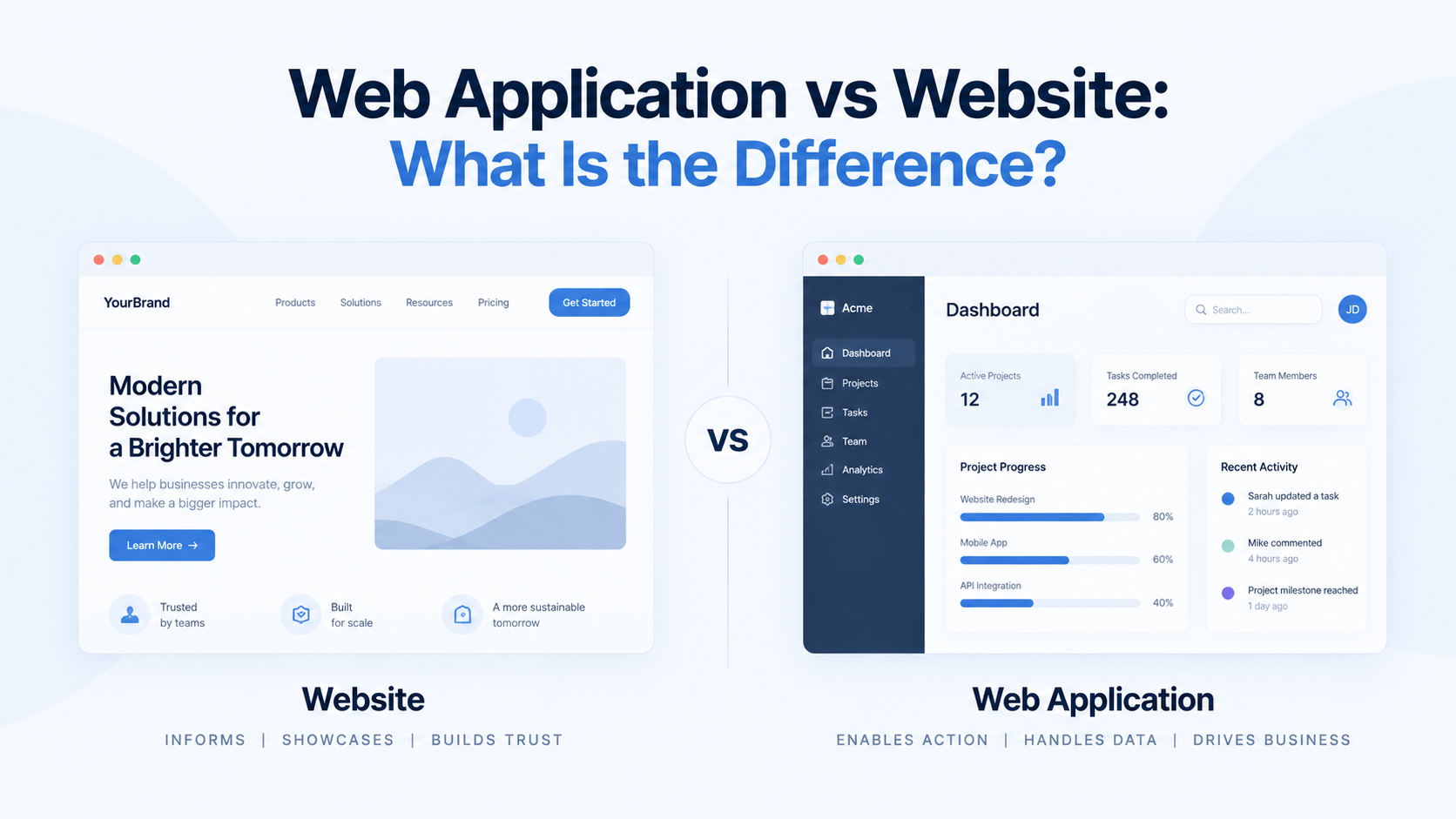
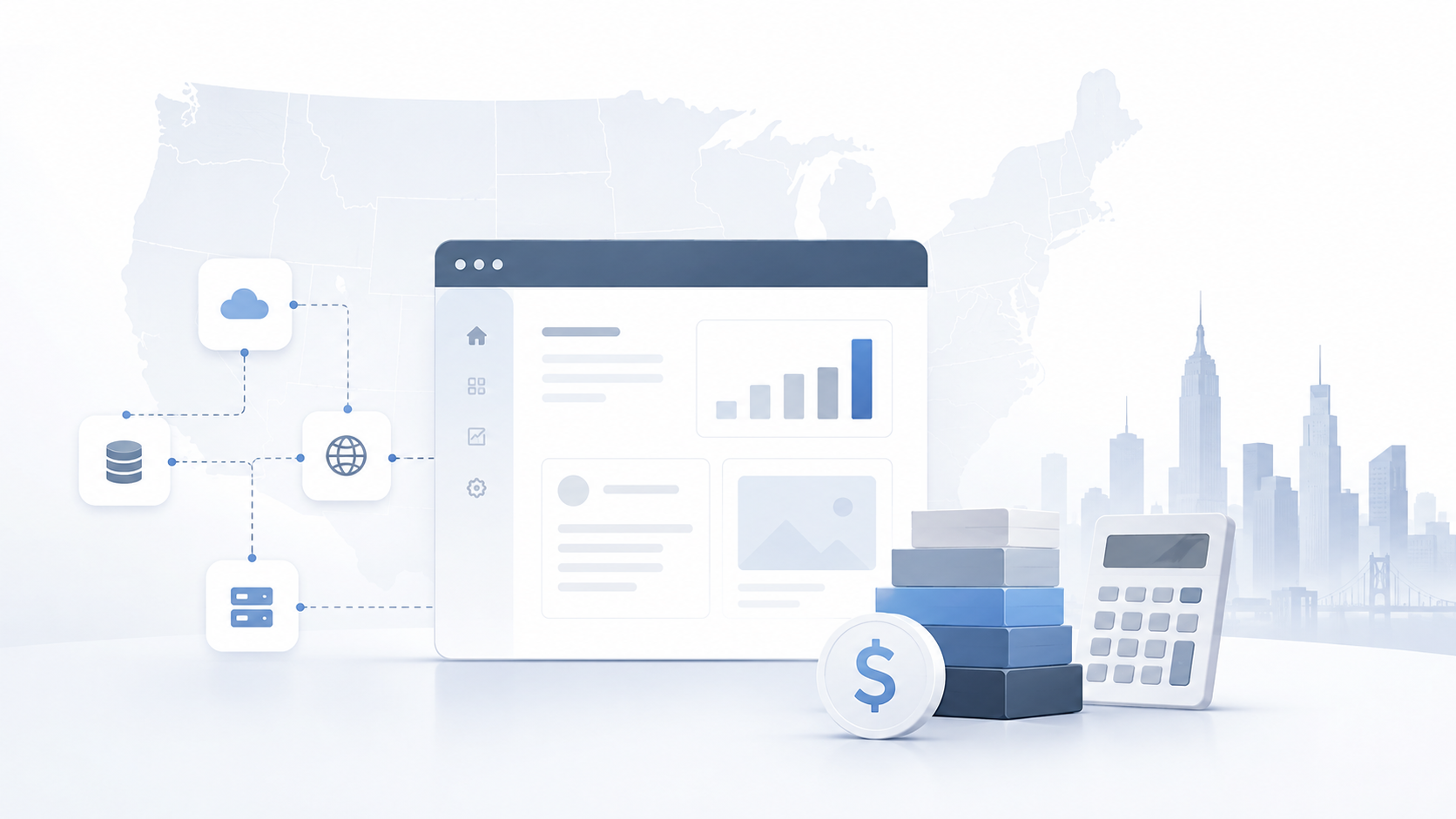
A modern enterprise web application is more than a browser interface. It usually combines a frontend, backend services, APIs, identity, databases, event streams, cloud infrastructure, observability, CI/CD pipelines, third-party systems, and security controls.
The application may be a customer portal, SaaS platform, internal workflow system, analytics dashboard, commerce product, or progressive web application. The engineering challenge remains similar: each component must remain maintainable without creating unnecessary operational complexity.
That changes how leaders should define the project. A “new web app” may require decoupling a legacy backend, exposing capabilities through APIs, consolidating identity, rebuilding a design system, or moving workloads into a scalable cloud environment.
The most important early decision is therefore not whether to use a particular JavaScript framework. It is whether the target architecture can support transaction volume, integration patterns, deployment frequency, security boundaries, data residency, and future AI use cases. Those constraints usually determine how expensive future releases become.
Which Web Application Architecture and Technology Stack Should Enterprises Choose?
Technology selection should follow workload requirements and team realities. React, Angular, Next.js, and similar frontend technologies can all support enterprise products when paired with sound component architecture, testing, accessibility, and performance practices. Backend choices such as Java, .NET, Node.js, Python, or Go depend on workload characteristics, internal expertise, and platform standards.
The larger decision often sits between a modular monolith, microservices, or a hybrid model. Microservices can support independent deployments and ownership boundaries, but they add network failure modes, distributed tracing, schema coordination, service discovery, and more complex incident response. Enterprises should not split services merely because microservices appear more modern.
Micro frontends require the same caution. They can help large autonomous teams release independently, but tightly coupled domains may gain little from the added runtime and governance overhead.
API-first design matters more as applications connect internal services, partners, mobile clients, analytics systems, and AI agents. Postman reports that 51% of developers cite unauthorized or excessive API calls from AI agents as a leading security concern. AI readiness therefore requires scoped credentials, machine identities, authorization policy, audit trails, rate controls, and governed data access, not simply an LLM endpoint.
Infrastructure choices such as containers, Kubernetes, serverless platforms, managed databases, CDNs, and edge services should be judged by reliability, observability, deployment speed, recovery objectives, and total operating cost.
How Should an Enterprise Web Application Move From Discovery to Production?
Enterprise development works better when discovery identifies business capabilities and system dependencies before architecture is locked. Teams need to map user journeys, integrations, data ownership, regulatory requirements, performance targets, failure scenarios, and systems that must remain operational during change.
Greenfield products can establish a target architecture early and build through incremental releases. Existing platforms require more care. Replacing a large application in one program can force the organization to fund old and new environments simultaneously while delaying visible value.
Incremental modernization can reduce that risk. Teams can place APIs around legacy capabilities, separate high-change modules, introduce new frontends, migrate workloads gradually, and retire old components as traffic shifts. Feature flags, backward-compatible APIs, automated regression tests, canary releases, and rollback procedures limit the blast radius of each change.
Delivery pipelines should make automated testing, security scanning, infrastructure provisioning, observability, and release controls part of the product. If every release depends on manual environment work, coordinated downtime, or a small platform team, application teams will struggle to improve delivery speed.
Cost should also be evaluated at system level. Integration complexity, data migration, availability targets, security controls, legacy dependencies, test automation, cloud consumption, and long-term maintenance usually influence enterprise cost more than screen count.
How Do Enterprises Keep Web Applications Secure, Fast, Accessible, and AI-Ready?
Security architecture needs to begin before development. OWASP’s 2025 Top 10 ranks Broken Access Control first, followed by Security Misconfiguration and Software Supply Chain Failures. The supply-chain category covers risks across components, repositories, dependencies, build systems, and CI/CD environments.
The urgency is rising. Verizon’s 2026 Data Breach Investigations Report says 31% of breaches now begin with software vulnerability exploitation, making it the leading initial access vector in the report.
A production baseline should include federated identity, OAuth or OIDC, least-privilege authorization, secrets management, encryption, dependency scanning, software bills of materials, SAST and DAST, API protection, audit logging, patching, and CI/CD security controls.
Performance needs equal discipline. Teams should define caching strategies, CDN delivery, database optimization, asynchronous processing for expensive workloads, autoscaling, load testing, SLOs, tracing, and telemetry connected to important user journeys.
Accessibility also belongs in the engineering definition of done. W3C recommends WCAG 2.2 when organizations create or update accessibility policies, making it a practical baseline for design systems, forms, authentication flows, navigation, focus behavior, and input interactions.
AI-enabled applications add another control plane. Model gateways, prompt and data boundaries, agent permissions, retrieval authorization, output validation, logging, and human approval for consequential actions should sit inside the architecture before pilots reach production.
Which Web Application Development Consulting Companies Should Enterprises Consider in 2026?
Enterprises need different partners depending on whether the problem is product delivery, modernization, operating-model change, or a broader technology transformation.
- GeekyAnts: GeekyAnts fits organizations looking for hands-on product engineering that combines web and backend engineering with DevOps, digital experience, AI product engineering, and application modernization. Its current portfolio spans AI and intelligent systems, AI-powered product engineering, enterprise modernization, digital customer experience, web engineering, and full-stack engineering, making it relevant when architecture advice needs to continue through implementation.
- Thoughtworks: Thoughtworks suits organizations dealing with complex application estates, modernization, engineering-practice change, and ongoing platform improvement. Its current managed-services approach emphasizes continuous modernization, SRE, infrastructure operations, data platforms, and technical-debt reduction rather than treating modernization as a one-time replacement effort.
- Accenture: Accenture is better aligned with broad transformation programs where application development connects to cloud programs, operating-model redesign, data initiatives, and large legacy portfolios. Its application transformation practice focuses on custom software, modern distributed architectures, cloud-native approaches, and changes to software engineering operating models.
Partner selection should follow the constraint the organization needs to remove, not vendor size alone.
How Should Technology Leaders Decide Whether to Build, Modernize, or Bring in a Development Partner?
The decision should start with the bottleneck. Some organizations lack product engineering capacity. Others have enough developers but struggle with architecture, legacy dependencies, cloud governance, security, data integration, or release engineering.
A complete rewrite is rarely the only option, and an external partner should not become the default answer. A stronger starting point is an architecture and delivery assessment that identifies which parts of the current system create the most risk, cost, and delay, then separates what should be retained, modernized, replaced, or newly built.
For engineering and digital leaders, that assessment can turn a broad web modernization initiative into smaller decisions with measurable outcomes. A focused consultation around the existing application estate, target architecture, AI readiness, delivery constraints, and modernization sequence can expose the highest-value next step before a large program begins.