Enterprise engineering leaders rarely need another argument for using AI. Most teams already are. The harder question is whether AI should remain a developer productivity layer or become part of how applications are designed, built, tested, released, and operated.
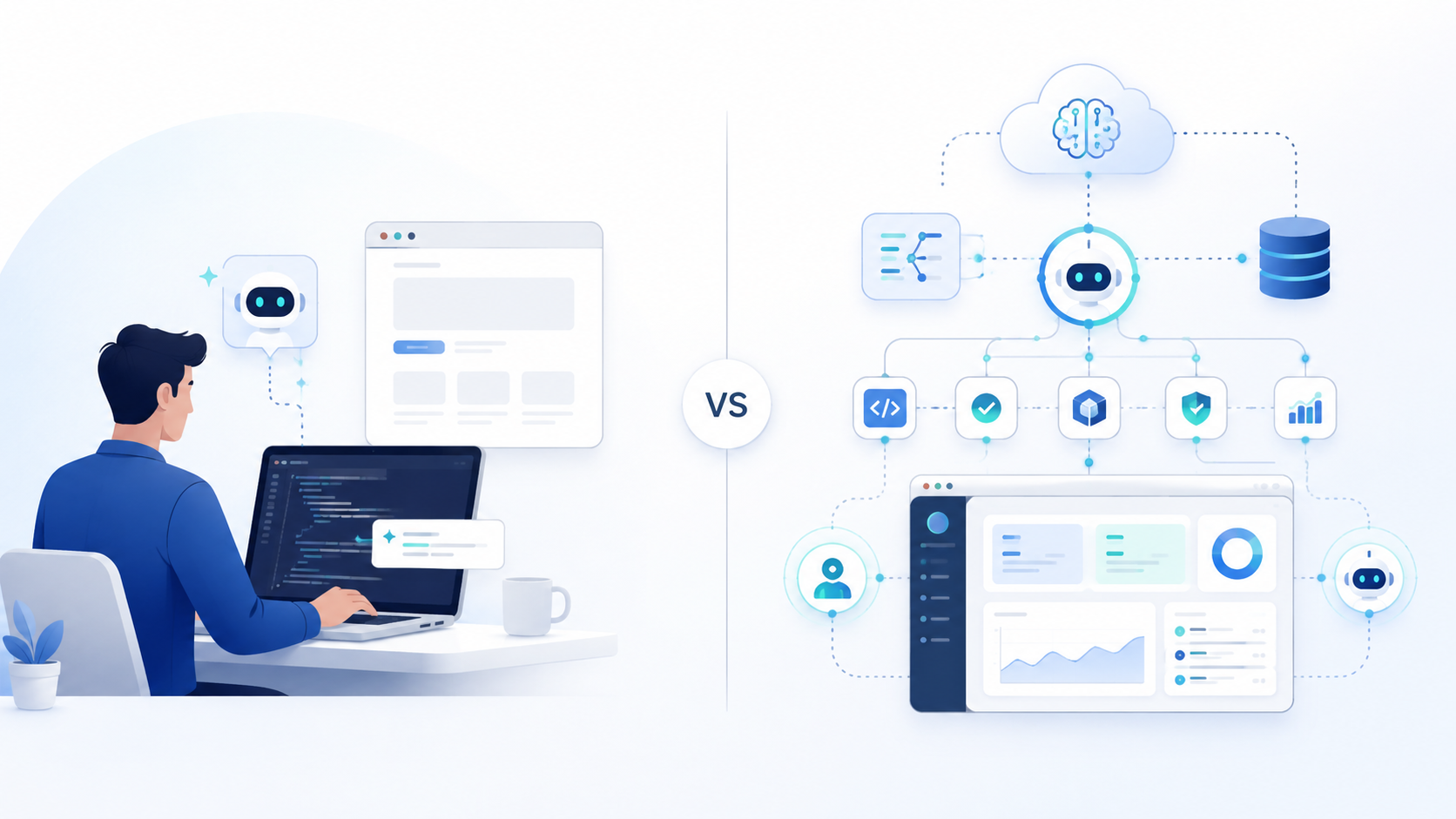
AI-assisted development improves tasks inside an existing delivery model. Engineers use coding assistants for generation, refactoring, debugging, documentation, or tests, while requirements, architecture, quality gates, and release controls largely keep their existing shape.
AI-native development changes the operating model. AI becomes a governed participant across the software development lifecycle, with access to structured context, tools, test environments, observability, and defined decision boundaries. Humans remain accountable, but their work shifts toward intent, architecture, validation, and risk control.
Google Cloud’s 2025 DORA research, based on nearly 5,000 technology professionals, found that 90% of respondents used AI at work and more than 80% believed it improved productivity. Yet 30% reported little or no trust in AI-generated code. Adoption is no longer the enterprise constraint. Trustworthy integration is.
What actually changes when development becomes AI-native?
The practical difference is not whether a developer can ask a model to write React components. It is whether AI can work with the same constraints experienced engineers use to make good decisions.
In an AI-assisted workflow, a model usually receives a prompt, limited repository context, and perhaps IDE instructions. An AI-native system adds persistent context such as architecture rules, domain terminology, security policies, interface contracts, testing conventions, approved dependencies, and deployment requirements. The model can then act inside controlled boundaries instead of improvising around one coding task.
For enterprise web platforms, the distinction appears in four places:
- Requirements and architecture: AI-assisted teams may summarize stories or propose code. AI-native teams can turn product intent into acceptance criteria, identify affected services, trace dependencies, draft architecture decisions, and flag conflicts with platform standards. Human architects still decide, but the model works from governed context.
- Build and integration: AI-assisted development accelerates individual coding. AI-native development connects agents to repositories, CI pipelines, test harnesses, API specifications, and approved tools. An agent can create a branch, modify files, run checks, repair failures, and prepare a pull request for review. GitHub’s agentic workflow direction reflects this move from autocomplete toward issue-to-pull-request execution.
- Quality and security: AI-native teams make automated gates part of the agent’s path. Static analysis, dependency checks, unit and contract tests, accessibility checks, and security scanning can run before human review. The objective is not to trust AI more. It is to make unsafe output harder to merge.
- Operations and maintenance: AI-native workflows continue after release. Models can use telemetry, incident history, runbooks, ownership data, and recent changes to support triage or propose remediation. Production actions still need explicit authorization and rollback controls.
Why does architecture matter more than coding speed?
For a VP overseeing large engineering groups, local coding speed is rarely the only bottleneck. Teams may generate code faster and still wait on environment provisioning, architecture reviews, test data, security approvals, integration dependencies, or release windows.
That is why AI-native development depends heavily on platform engineering. DORA’s 2025 research reports that 90% of organizations had adopted at least one internal platform and links platform quality with the ability to capture value from AI. Its broader conclusion is that AI amplifies the system already in place. Strong workflows improve, while weak workflows create faster downstream congestion.
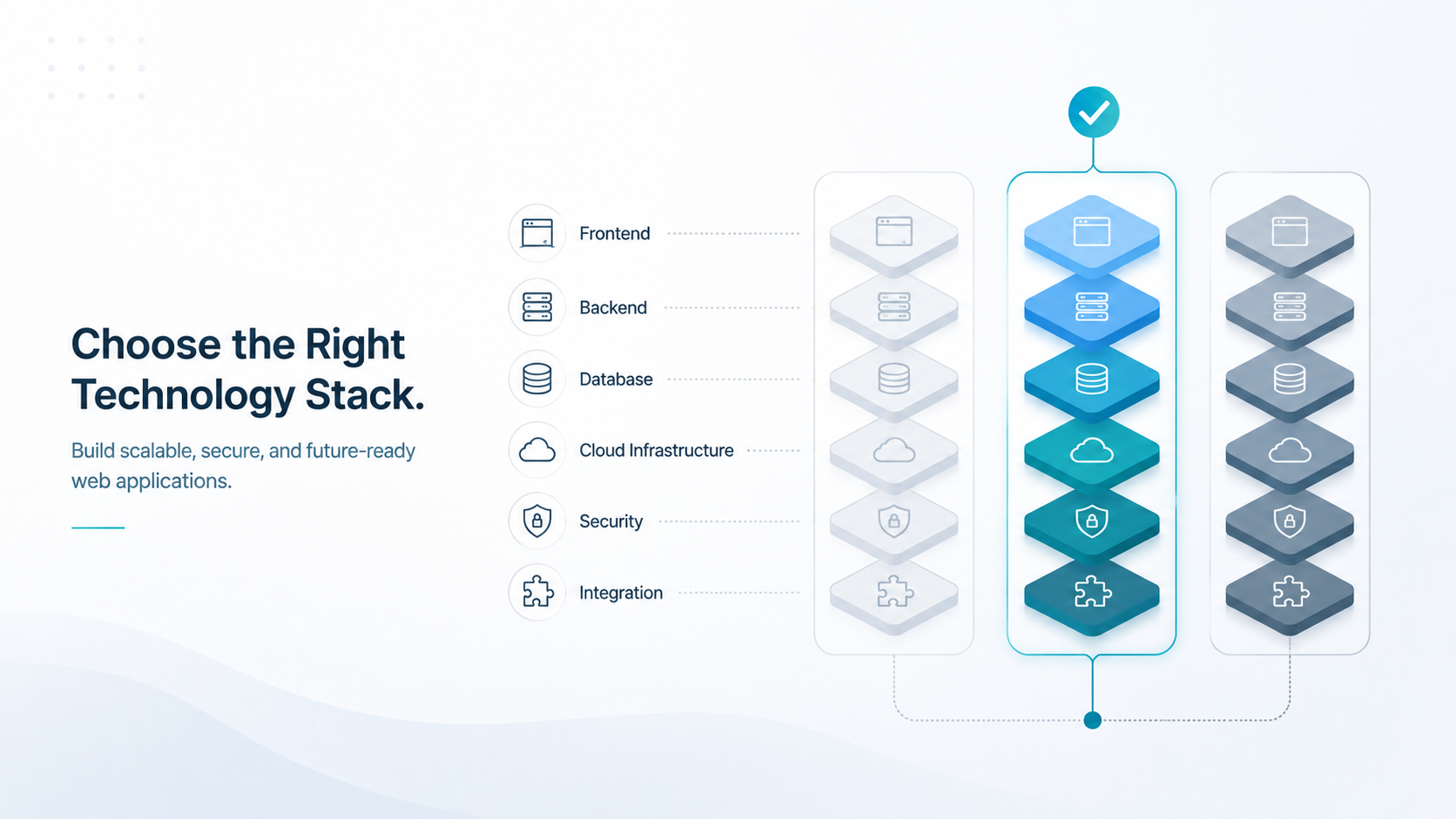
Technically, an AI-native web environment needs more than model access. It needs an authoritative context layer, model routing and policy controls, least-privilege tool permissions, isolated execution environments, evaluation suites, audit logs, observability, and fallbacks when models fail. The application architecture matters too. Stable interfaces, automated tests, and repeatable delivery give agents clear boundaries. Tightly coupled legacy systems with undocumented dependencies do the opposite.
Recent productivity research supports that caution. METR’s early-2025 randomized study found experienced open-source developers were slower with then-current AI tools in its setting. By February 2026, METR said newer tools likely offered more acceleration, but its follow-up had become difficult to interpret because developers increasingly avoided no-AI conditions and many used agents concurrently. Enterprises therefore need their own workflow-level measurement rather than generic productivity assumptions.
How should enterprise teams govern AI-native development?
The biggest governance mistake is treating AI-generated code as a special category outside normal engineering controls. It should face the same or stronger evidence requirements as human-written code.
A reviewer should be able to trace a change back to the requirement, see what context the model received, which tools it used, what files changed, which tests ran, what security checks passed, and where a human approved the result. Higher-risk systems may also require model and prompt versioning for reproducibility.
The human role therefore becomes more technical, not less. Senior engineers spend less time producing first drafts and more time defining boundaries, reviewing architecture, testing assumptions, and deciding where autonomous execution is acceptable. Both Wolfpack Digital and HatchWorks describe the distinction similarly: AI-native development spans the lifecycle with structured human direction rather than simply adding a coding assistant.
Governance should also be risk-tiered. Generating internal documentation does not need the same approval path as changing payment logic. Autonomy can be assigned according to blast radius, data sensitivity, reversibility, and test coverage. Low-risk work can move through automated validation. High-risk changes require explicit human review and production controls.
When does AI-native web application development make business sense?
AI-assisted development remains the better choice for many organizations. If the goal is improving developer experience inside a mature delivery system, coding assistants can create value without forcing an operating-model redesign. They also fit environments where repositories are highly sensitive, platform APIs are immature, or delivery still depends on manual approvals.
AI-native development becomes more compelling when an organization is building or modernizing a web platform with repeatable engineering patterns, strong automated testing, and enough delivery volume to justify orchestration. It is particularly relevant when leaders want to reduce cycle time across requirements, implementation, testing, and maintenance rather than optimize coding alone.
The business case should be measured through flow and quality metrics, not lines of generated code. Leaders should watch lead time, review time, escaped defects, change failure rate, recovery time, rework, security findings, and the share of agent-produced changes that pass without major human correction.
External support can help when the internal platform or governance model is not ready. Enterprise buyers may compare consulting firms such as Thoughtworks, Slalom, and GeekyAnts, which publicly position AI-enabled engineering or product development within broader transformation work. The useful distinction is whether a partner can connect AI workflows to the client’s architecture, security model, SDLC controls, and measurable delivery outcomes.
What should VPs ask before changing the operating model?
The decision should start with a bottleneck map. If engineering loses most of its time to unclear requirements, brittle integration environments, slow test suites, fragmented platform services, or release governance, adding more code generation may increase pressure on the wrong part of the system.
A useful consultation should examine where work waits, which decisions can be expressed as policy, what context an AI agent can safely access, and what evidence must exist before generated work can progress. Leadership can then test one narrow lifecycle slice against a baseline, such as requirements-to-tested-pull-request for one product area.
The choice is not AI-assisted or AI-native as a branding exercise. AI-assisted development can make engineers faster. AI-native development can make the delivery system itself more programmable. The second option carries more upside, but only when platform engineering, governance, and measurement are ready to support it.
That is the question worth pressure-testing before the next tooling investment: not which assistant to license, but which parts of the software delivery system are mature enough to redesign around AI.