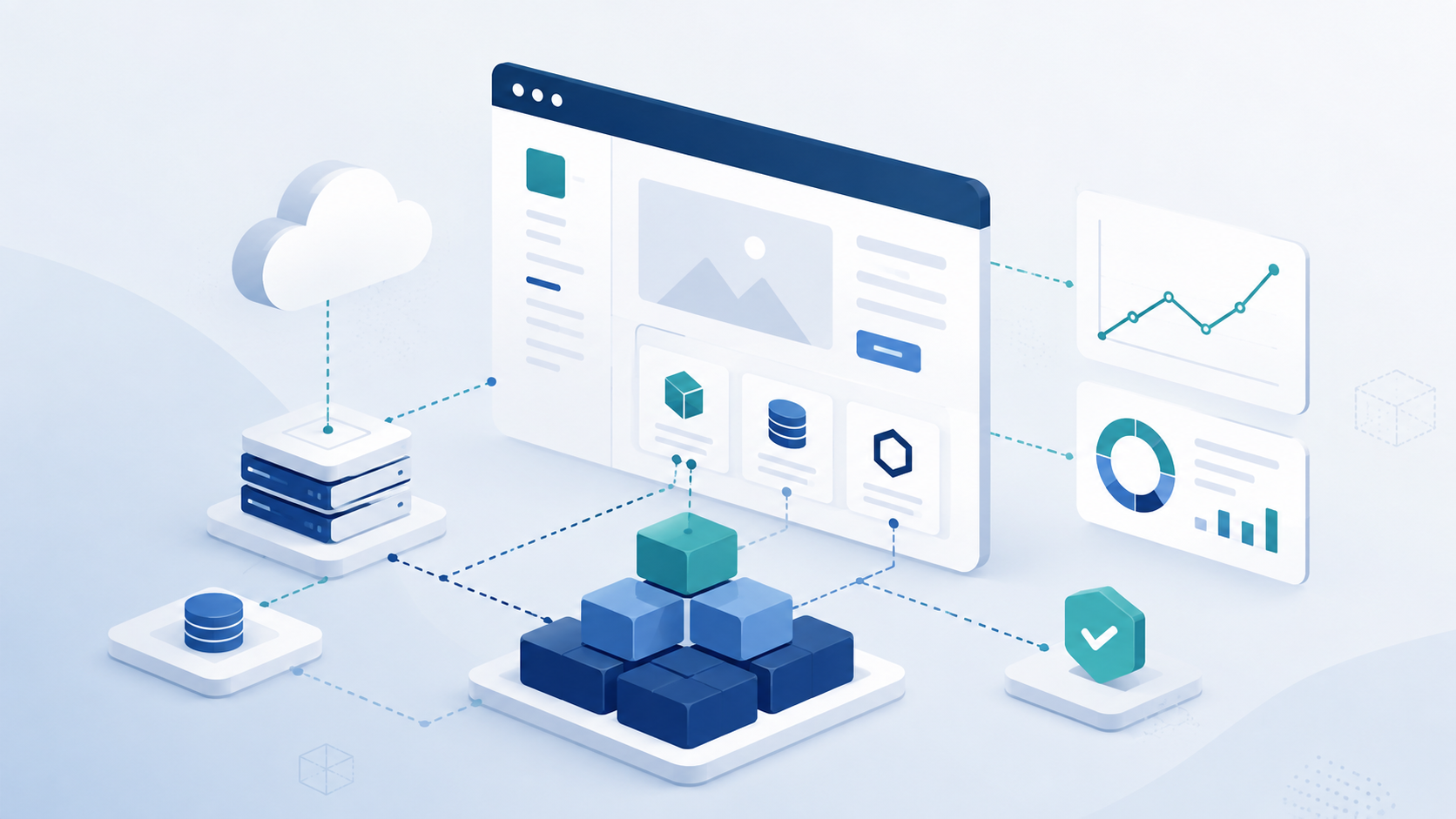
Enterprise web applications rarely expose risk through a single codebase or browser interface. A customer portal may depend on identity providers, APIs, cloud infrastructure, CI/CD workflows, SaaS integrations, and microservices. A conventional vulnerability scan can inspect part of that surface and still leave consequential paths untouched.
That gap matters because exploitation of vulnerabilities has become the most common initial access vector in Verizon’s 2026 Data Breach Investigations Report, accounting for 31% of initial access in its dataset. Verizon also found that only 26% of critical vulnerabilities in the CISA Known Exploited Vulnerabilities catalog were fully remediated during 2025, while median resolution time increased to 43 days.
For engineering leaders, the problem is not simply whether a security test took place. The harder questions are whether the right attack surfaces were tested, whether findings map to production risk, who owns remediation, and whether unresolved exposure should block a release.
What Should an Enterprise Web Application Security Testing Checklist Actually Cover?
OWASP Top 10:2025 places Broken Access Control, Security Misconfiguration, and Software Supply Chain Failures in the first three positions. That reflects how application risk now extends into identity boundaries, configuration-heavy architectures, dependencies, and delivery systems. A useful enterprise checklist should test those areas as connected parts of one production system.
- Authentication, identity, and access control: Teams should validate SSO, MFA enforcement, account recovery, service accounts, administrative functions, role boundaries, object-level authorization, tenant isolation, and privilege escalation. Testing should call APIs directly rather than assume the UI protects restricted actions. Because Broken Access Control remains OWASP’s top risk, reviewers should test whether changing an identifier, token, role claim, endpoint, or request sequence exposes another user’s data or enables a prohibited action.
- Session, token, and API security: Testing should examine session rotation, logout invalidation, cookie attributes, token expiration, refresh-token handling, OAuth and OIDC implementation, JWT validation, replay resistance, rate limiting, GraphQL authorization, undocumented endpoints, and machine-to-machine credentials. APIs often expose more capability than visible screens, so a secure front end can still sit above an over-permissive backend.
- Input handling and injection resistance: Security teams should test SQL and NoSQL injection, command injection, cross-site scripting, server-side request forgery, template injection, file uploads, path traversal, deserialization, and parameter manipulation. Parameterized queries, contextual output encoding, allow-list validation, file verification, safe parsing, and server-side authorization should be assessed separately because one generic “input validation” control rarely covers every execution context.
- Data protection, secrets, and cryptography: Reviews should inspect TLS configuration, encryption at rest, password hashing, cryptographic key storage, secrets in repositories, environment variables, build logs, browser storage, caches, telemetry, error messages, URLs, and backups. Teams should also verify key rotation, secrets revocation, and environment separation.
- Dependencies, build systems, and software supply chain: Testing should include direct and transitive dependencies, unsupported libraries, container images, package pinning, dependency confusion, artifact integrity, SBOM generation, repository permissions, build-server access, signing, and CI/CD secrets. OWASP expanded this area into Software Supply Chain Failures for 2025, covering risks across dependencies, build systems, repositories, artifacts, and distribution infrastructure.
- Cloud, infrastructure, and security configuration: Teams should test IAM policies, public storage, exposed management interfaces, Kubernetes settings, CORS, CSP, security headers, debug modes, default credentials, unused services, WAF rules, infrastructure-as-code, and environment drift. Security Misconfiguration moved to second place in OWASP Top 10:2025, reflecting how much application behavior now depends on configuration.
- Business logic, logging, and failure conditions: Manual testing should probe approval bypasses, transaction manipulation, race conditions, pricing logic, retry abuse, workflow sequencing, resource exhaustion, exception handling, audit trails, and alerting. These weaknesses often survive automated scanning because the scanner does not understand what the application is supposed to allow. Teams should also verify that suspicious activity creates usable telemetry for incident response.
How Should Enterprise Teams Combine SAST, DAST, SCA, API Testing, and Penetration Testing?
No single testing method covers the complete application. Static application security testing can identify risky code patterns early. Software composition analysis examines dependencies. Secret scanning and infrastructure-as-code checks can run during pull requests and builds. Dynamic testing evaluates deployed behavior. API testing exercises endpoints independently of the interface. Manual penetration testing explores authorization failures, business logic abuse, attack chaining, and architectural assumptions that automated tools struggle to model.
The important decision is where each control belongs in the delivery lifecycle. A critical dependency found in staging creates a different operational problem from the same issue blocked during a pull request.
NIST’s Secure Software Development Framework recommends integrating secure development practices into the software lifecycle to reduce vulnerabilities in released software, limit the impact of undetected weaknesses, and address root causes. OWASP ASVS 5.0 provides verification requirements organizations can use as a security benchmark and as a basis for procurement requirements.
For large organizations, tooling matters less than the operating model around it. Findings need owners, severity rules, remediation expectations, and evidence that fixes were retested.
Which Security Findings Should Actually Block a Production Release?
A scanner’s severity should not become the release policy by itself. Enterprise teams need to combine technical severity with exploitability, internet exposure, affected data, authentication requirements, privilege gained, asset criticality, blast radius, compensating controls, active exploitation evidence, and the ability to detect abuse.
A remotely exploitable authorization flaw affecting customer financial data should receive a different release decision from a high-scoring issue that cannot be reached in the deployed configuration.
Mature programs define security gates before final release approval. Findings may require remediation before deployment, time-bound remediation after release, documented risk acceptance with compensating controls, or closure as non-exploitable. Thresholds vary by application, but the decision model needs consistency.
This is where security testing becomes an engineering control rather than a security-team report. If a scanner creates thousands of findings without ownership or release consequences, the organization has visibility but not enforcement. Leadership should be able to trace a material finding from detection through triage, remediation, retesting, deployment, and monitoring.
When Does an Enterprise Team Need External Application Security Expertise?
Internal application security teams often understand enterprise policy and architecture better than an outside provider. External expertise becomes useful when the organization needs independent validation, specialist penetration testing, additional capacity before a release, or engineers who can help remediate problems rather than only report them.
Different consulting firms approach that work from different directions. Accenture combines application security with broader cybersecurity and transformation programs, including DevSecOps and security testing in the software lifecycle. Thoughtworks emphasizes secure software delivery and embedding security into continuous delivery rather than treating it as a separate phase. GeekyAnts takes a product-engineering-oriented approach, connecting security and compliance practices with web engineering, architecture, infrastructure, testing, and production delivery.
The useful selection criterion is whether the engagement can identify exploitable paths, prioritize production risk, work with engineering owners, and verify remediation without unnecessarily slowing delivery.
What Should Engineering Leaders Ask Before Calling a Web Application Secure?
A completed penetration test, a passing scanner, or an OWASP checklist cannot prove that an enterprise application is secure. They can provide evidence that specific risks were evaluated under specific conditions.
The more useful release conversation asks what was tested, what remained outside scope, which weaknesses can realistically be exploited, which findings should stop deployment, who owns remediation, and whether fixes were independently retested.
For organizations approaching a web release, platform modernization, cloud migration, or security review, an application-security and architecture assessment can help answer those questions against the real system before another tool is added to the stack. The objective is not to produce a longer vulnerability list. It is to give engineering leadership enough evidence to decide what can ship, what must change, and which risks the organization is knowingly carrying into production.