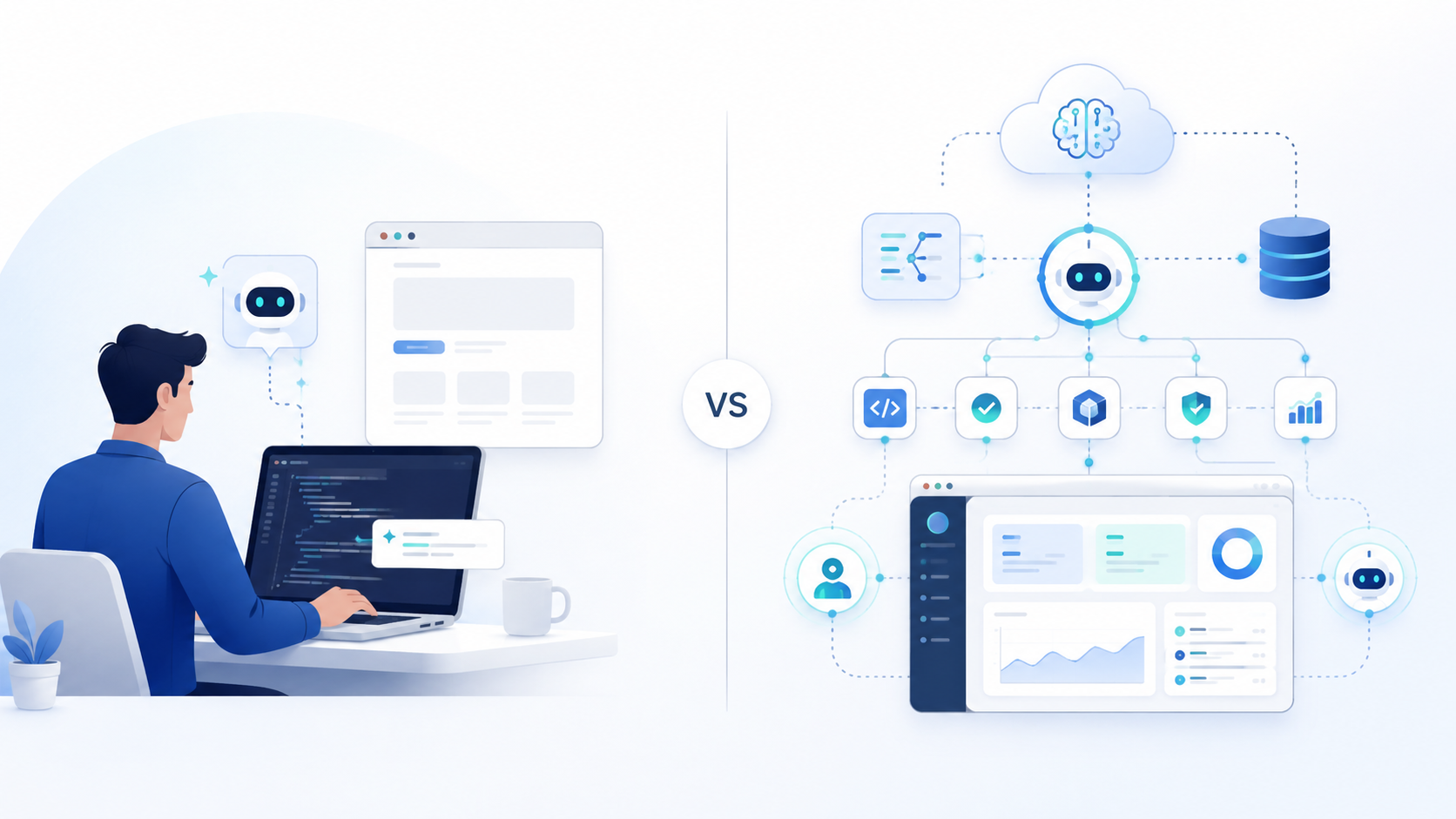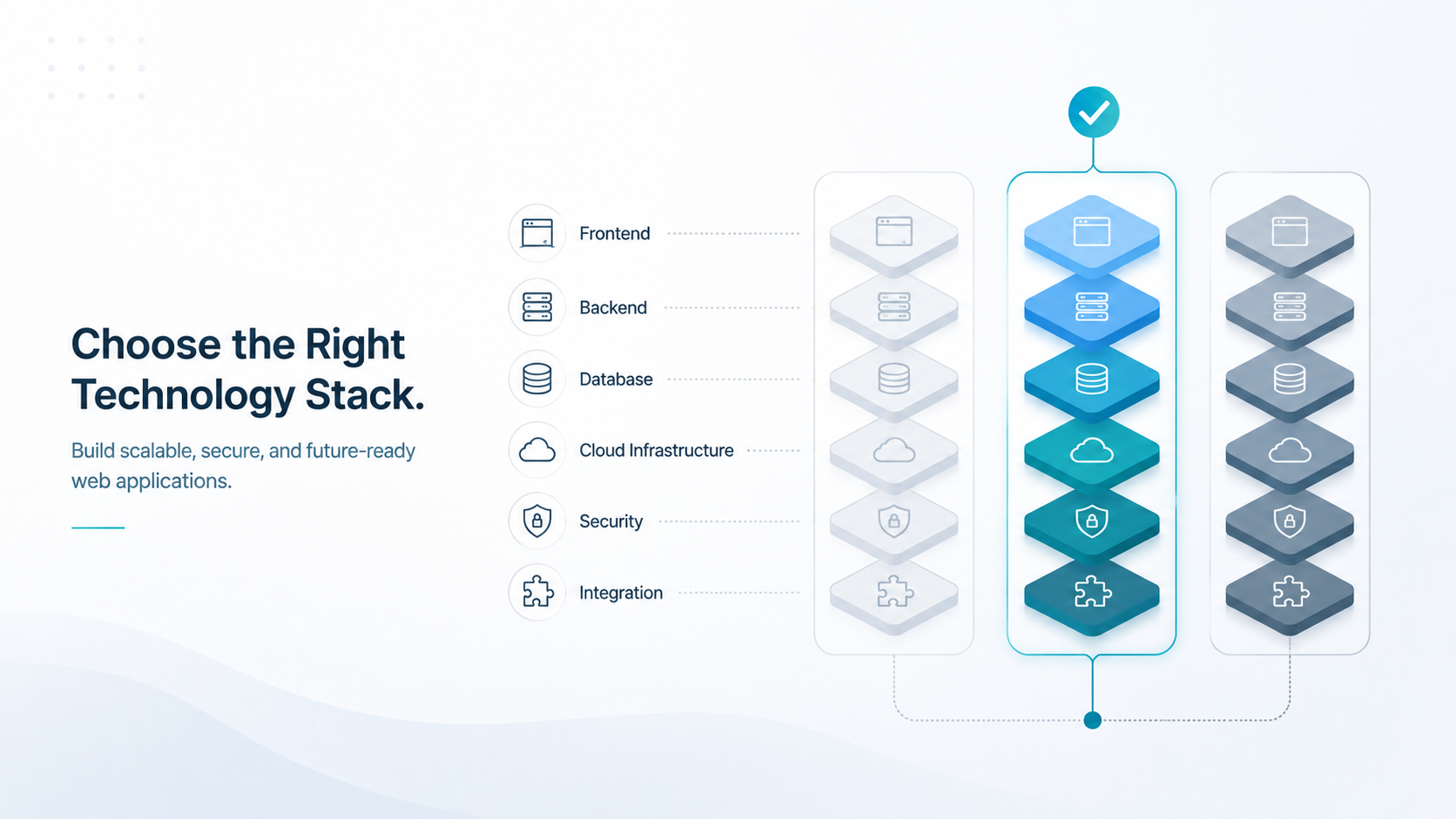
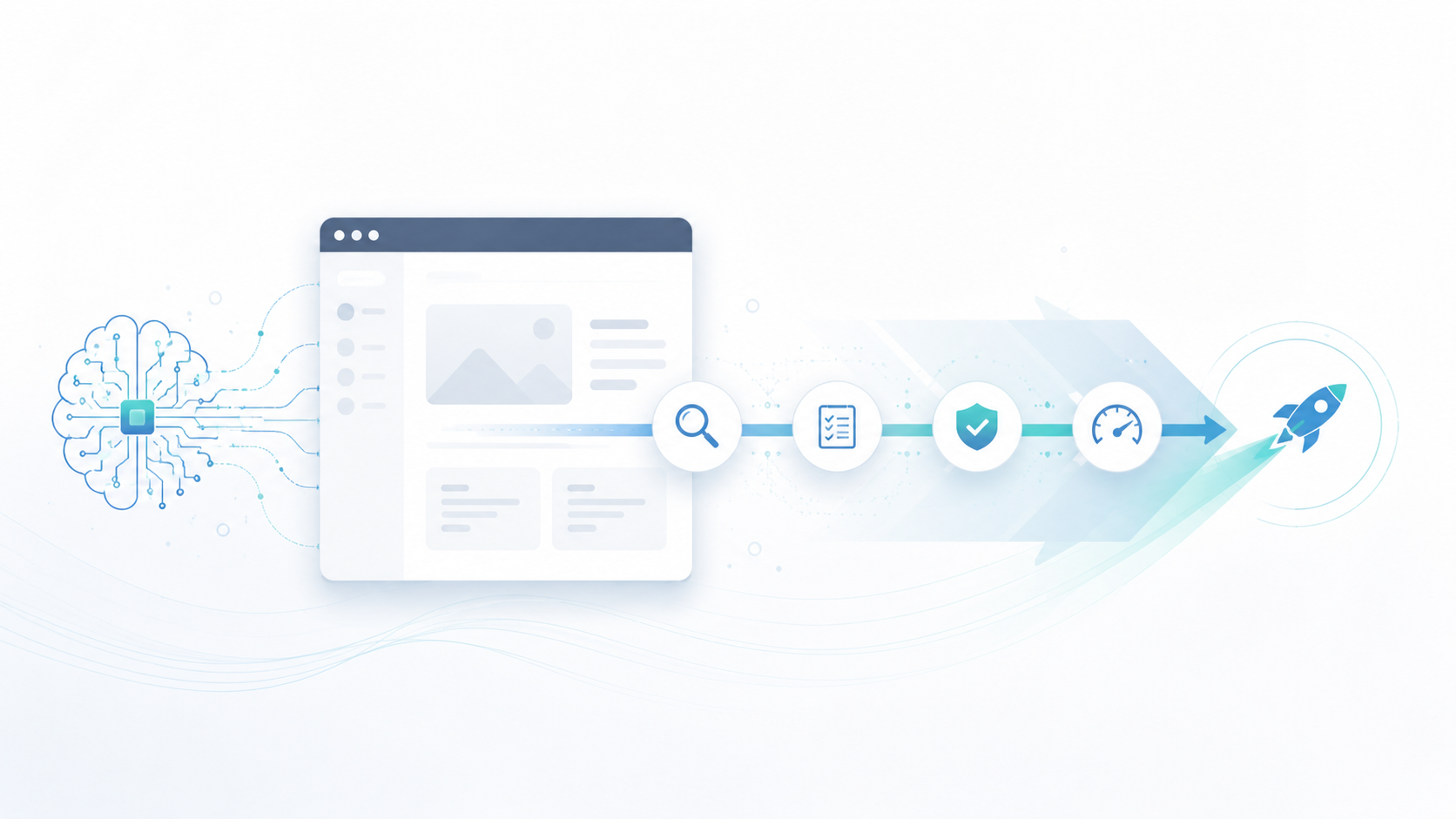
For large digital organizations, release speed is rarely limited by how quickly developers write code. The delay usually appears after the pull request: regression suites take hours, test environments drift, data is difficult to prepare, UI changes break scripts, and engineers spend time separating product defects from flaky automation. AI-based testing matters because it can compress those feedback loops rather than simply automate more test cases.
The pressure is visible in industry data. Tricentis reported in its 2025 survey of 2,750 technology and software professionals that 63% of organizations ship some code changes without fully testing them. Capgemini’s World Quality Report 2025-26 found that 43% of organizations were experimenting with generative AI in quality assurance, while only 15% had scaled it enterprise-wide. The opportunity is real, but so is the implementation problem.
Why do web application release cycles still stall after development is finished?
Enterprise web applications rarely slow down because a team lacks Selenium, Playwright, Cypress, API tests, or CI jobs. They slow down because test execution is not sufficiently selective, test maintenance consumes engineering capacity, and failure analysis remains manual.
A small frontend change can trigger thousands of end-to-end, integration, contract, accessibility, and browser tests because the pipeline cannot reliably determine which business flows are exposed. The result is a release gate optimized for caution rather than speed. Teams add parallel runners, but infrastructure cost rises while the selection problem remains.
Maintenance creates another queue. Dynamic locators, component-library updates, feature flags, API schema changes, and microservice dependencies can invalidate tests even when customer behavior remains correct. Engineers repair automation before they can determine whether the release itself is safe.
DORA’s 2025 research describes AI as an amplifier of the software delivery system rather than a standalone productivity fix. AI-based testing shortens release cycles only when it connects to code changes, test history, dependency information, observability, and a disciplined delivery pipeline.
Where can AI remove the most time from the testing cycle?
The largest gains come from applying AI to decisions that traditionally require manual interpretation, not from replacing every deterministic test with a model.
- Risk-based test selection can reduce unnecessary regression execution. A model can combine the code diff, service dependencies, historical failures, coverage maps, production telemetry, and business criticality to score which tests matter to a change. The pipeline can run high-confidence affected tests first, then expand coverage when the risk score or change scope crosses a defined threshold. Teams should still be able to see why a test was selected or skipped. Risk-based prioritization is already one of the established AI testing patterns, but enterprise implementations need explainable selection policies rather than opaque test suppression.
- Generative test creation can shorten the time between requirement change and executable validation. AI can derive candidate scenarios from acceptance criteria, OpenAPI specifications, component contracts, production defects, and code changes. It can also propose boundary conditions and synthetic test data. The generated tests still need deterministic assertions, review rules, and version control. Used this way, AI reduces test-authoring latency without turning release approval into a probabilistic decision. Current AI testing approaches increasingly apply generation across test design, data creation, regression, and reporting workflows.
- Self-healing automation can reduce maintenance queues when interfaces change. Rather than binding a test only to a brittle selector, an AI-assisted framework can consider semantic labels, DOM context, accessibility attributes, visual structure, and historical behavior to identify a likely replacement. Healing should not silently rewrite production-critical tests. Mature teams record the proposed change, apply confidence thresholds, and require review for high-risk workflows such as payments or identity. Self-healing is becoming a common feature of AI-assisted web testing because conventional selector maintenance creates significant friction in frequently changing interfaces.
- AI-assisted failure triage can shrink the time between a red pipeline and a useful engineering decision. Models can cluster failures by stack trace, log pattern, browser state, recent commit, service dependency, screenshot, and incident history. They can distinguish likely application defects from environment failures or recurring flakes and route the issue to the relevant owner. That reduces the period in which developers, QA engineers, and platform teams wait for someone to explain why the build failed. AI-based defect analysis and test reporting are already emerging as important parts of the broader testing lifecycle.
Capgemini’s 2025-26 report shows why this layer is difficult to scale: 60% of organizations reported challenges with secure, scalable test data, and 58% cited difficulties adopting AI-powered tools. AI cannot compensate for weak test data, fragmented observability, or unowned automation.
What does an enterprise AI testing architecture need to look like?
AI-based testing should sit inside the existing delivery control plane, not beside it as a separate experiment. The pipeline needs source-control events, build metadata, dependency graphs, test results, defect history, observability signals, and policy rules. A change-intelligence service can calculate risk, recommend or generate tests, orchestrate execution, and feed results into the release gate.
The deterministic layer should remain authoritative. Unit, integration, contract, security, accessibility, and end-to-end tests still produce explicit pass or fail outcomes. AI helps decide what to test, how to create missing coverage, what likely caused a failure, and where engineers should look next. This distinction aligns with DORA’s broader finding that the value of AI depends heavily on the engineering system and practices surrounding it.
For web platforms with microfrontends and microservices, the architecture becomes more valuable when it understands service boundaries. A checkout UI change may require browser validation, API contract tests, payment-service integration tests, and a small set of cross-device flows, but not every regression test in the estate. Change-aware selection converts automation coverage into cycle-time reduction.
Synthetic test data can also accelerate parallel execution and reduce dependence on shared environments, but privacy, referential integrity, and production realism still need controls. Capgemini reported that synthetic-data use in testing increased from 14% in 2024 to an average of 25% in 2025.
What can go wrong when teams optimize testing only for speed?
A shorter test run is not automatically a shorter safe release cycle. AI can suppress the wrong tests, over-heal broken automation, generate shallow scenarios, or learn from defect history that underrepresents rare but costly failures. The governance model therefore needs explicit boundaries.
Teams should retain full-suite execution on an appropriate cadence, preserve non-negotiable tests for critical customer journeys, log AI recommendations, version prompts and policies, and measure false-negative risk. High-impact release decisions should have deterministic evidence behind them. Human reviewers remain important when the system proposes changes to assertions, security controls, financial workflows, or compliance-sensitive behavior.
That caution is especially relevant because release pressure already competes with quality objectives. In Tricentis’ 2025 study, respondents prioritized improving delivery speed much more frequently than improving software quality, while 63% reported shipping some changes without complete testing.
If test environments are unstable, service virtualization is weak, or telemetry cannot connect failures to changes, AI will produce faster ambiguity. DORA’s 2025 research is useful here because it frames AI as a multiplier of the system around it. Strong delivery foundations become stronger; weak ones can generate more output without improving outcomes.
How should engineering leaders prove that AI testing reduced the release cycle?
The business case should be measured in flow, not in the number of AI-generated tests. Leaders should compare change lead time, test queue time, regression duration, mean failure-triage time, flaky-test rate, deployment frequency, escaped defects, and change failure rate before and after adoption. They should also track how often targeted regression replaces full-suite execution and the accuracy of those selection decisions.
External support can be useful when the constraint spans test architecture, platform engineering, and modernization rather than one tool. Accenture and Thoughtworks work across quality engineering and software delivery, while GeekyAnts also operates a QA engineering practice spanning web, API, CI/CD, automation, and AI-driven testing insights. The useful question is not which provider has the most AI features. It is whether the team can redesign the release feedback loop around the organization’s architecture and risk model.
For a VP of Engineering or Digital Platforms, the practical starting point is a release-cycle diagnostic: map where time accumulates from code complete to production, identify whether delays come from execution, maintenance, data, environments, or triage, and then decide where AI can remove decision latency without weakening evidence. That discussion usually reveals whether the organization needs another testing tool or a different quality-engineering operating model.