Artificial intelligence has changed what users expect from web applications. A few years ago, a responsive interface and fast loading pages were enough to stand out. Today, users expect intelligent search, personalized experiences, conversational interfaces, automation, and real-time recommendations as standard features.
This shift is forcing organizations to rethink how they build web applications. It’s no longer about creating another dashboard or customer portal. Modern web applications have become intelligent business platforms capable of making decisions, analyzing data, and assisting users in real time.
As businesses continue investing in digital transformation, the biggest competitive advantage no longer comes from simply having a web application. It comes from building one that continuously learns, adapts, and scales.
AI Is Becoming Part of Every Web Experience
Customers rarely think about artificial intelligence when they use a product. They simply notice that everything feels faster and more intuitive.
A modern web application might automatically categorize uploaded documents, recommend the next action for a sales representative, summarize long reports, detect suspicious transactions, or answer customer questions instantly.
These experiences are becoming expectations across industries.
Healthcare providers are using AI-enabled portals to assist patients before appointments. Financial institutions are reducing fraud through intelligent monitoring systems. Retail businesses are delivering personalized shopping journeys based on customer behavior instead of static product catalogs.
Rather than replacing traditional web development, AI is making applications significantly more valuable.
Web Applications Are Moving Beyond CRUD Systems
For years, enterprise applications followed a familiar pattern: users created, viewed, updated, and deleted records.
That model is evolving rapidly.
Today’s platforms are expected to interpret information instead of simply storing it. A project management application should identify delivery risks before managers notice them. A customer support platform should recommend responses automatically. HR systems should help recruiters screen thousands of applications efficiently.
In other words, software is becoming an active participant instead of a passive database.
This shift requires a different engineering mindset. Developers must combine traditional frontend and backend architecture with machine learning services, vector databases, AI APIs, retrieval systems, and strong security practices.
Performance Still Determines Success
Adding AI features means nothing if users are forced to wait for pages to load.
Performance remains one of the most important aspects of web application development.
Modern engineering teams focus on techniques such as server-side rendering, edge computing, intelligent caching, optimized APIs, lazy loading, and efficient database design to ensure AI-powered features remain responsive.
Users expect intelligence without sacrificing speed.
Balancing these priorities has become one of the biggest technical challenges for engineering teams in 2026.
Security Is No Longer Optional
As AI becomes integrated into enterprise software, organizations are handling significantly more sensitive information.
Financial records, medical reports, internal documents, legal contracts, and customer conversations often pass through AI services.
Protecting this data requires much more than standard authentication.
Modern web applications increasingly incorporate:
End-to-end encryption, role-based access control, secure API gateways, audit logging, compliance frameworks, identity management, and continuous monitoring to protect both users and businesses.
Organizations that fail to prioritize security often discover that adding AI introduces entirely new attack surfaces.
Building secure AI-enabled applications requires careful planning from the very beginning.
Scalability Matters More Than Ever
Many businesses begin with a simple MVP.
The challenge comes later.
A product that serves one thousand users today may need to support millions tomorrow while processing AI requests, handling real-time collaboration, and integrating multiple third-party services.
Scalable architecture allows organizations to expand without rebuilding everything from scratch.
Cloud-native infrastructure, containerization, distributed databases, event-driven architecture, and microservices have become common choices for businesses planning long-term growth.
Investing in scalability early often saves years of expensive technical debt.
Choosing the Right Technology Stack
There is no universal technology stack that works for every business.
However, several technologies continue to dominate modern web application development because of their maturity and ecosystem.
React remains a leading choice for building highly interactive user interfaces.
Next.js enables high-performance server-rendered applications with excellent SEO capabilities.
Node.js powers scalable backend services and APIs.
Cloud platforms provide infrastructure capable of supporting AI workloads without organizations managing physical servers.
The best architecture depends on business objectives rather than technology trends.
Successful engineering teams evaluate long-term maintainability, developer productivity, operational costs, and scalability before making technology decisions.
Why Engineering Expertise Matters More Than AI Tools
AI coding assistants have dramatically accelerated software development.
Developers can generate components, automate testing, create documentation, and prototype applications faster than ever before.
Yet building production-ready enterprise software still requires experienced engineers.
Architecture decisions, security design, infrastructure planning, performance optimization, accessibility, compliance, and maintainability remain human responsibilities.
Organizations that rely entirely on AI-generated code often encounter issues related to technical debt, inconsistent architecture, and security vulnerabilities.
The companies seeing the greatest success are combining AI-assisted development with experienced engineering teams capable of validating, optimizing, and scaling the final product.
Where Development Partners Add Value
As web applications become increasingly intelligent, many organizations choose experienced engineering partners to accelerate delivery while reducing implementation risks.
Companies such as GeekyAnts have worked with startups and enterprises to build scalable web applications using modern technologies including React, Next.js, Node.js, cloud-native infrastructure, and AI-powered capabilities. Their focus extends beyond writing code to designing systems that remain maintainable, secure, and ready for future growth.
For businesses introducing AI into existing platforms, experienced engineering teams can help identify the right architecture, optimize performance, and avoid costly redesigns later in the product lifecycle.
Looking Ahead
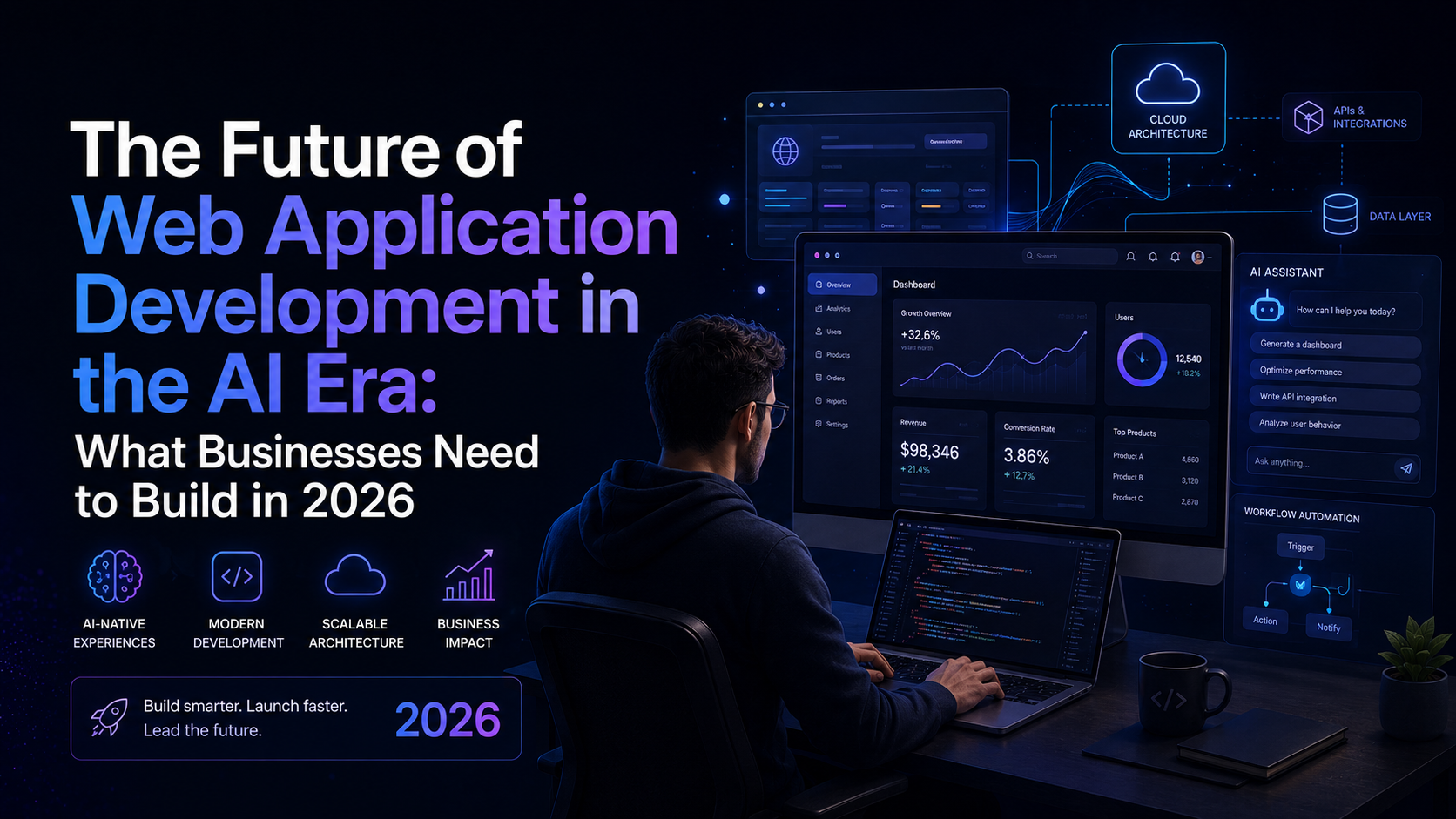
The future of web application development isn’t defined by artificial intelligence alone.
It’s defined by how effectively businesses combine intelligent automation with exceptional engineering.
Organizations that focus only on adding AI features may create impressive demonstrations but struggle in production. Those that invest equally in architecture, scalability, security, and user experience will build products that continue delivering value as technology evolves.
The next generation of successful web applications won’t simply respond to user actions. They’ll anticipate needs, automate repetitive work, surface valuable insights, and help businesses make faster, smarter decisions.
In 2026 and beyond, intelligent web applications won’t be considered innovative. They’ll simply be the standard by which every digital product is judged.