For large enterprises, the argument for building business operations without waiting for traditional development teams is easy to understand. Finance needs a new approval workflow. Operations wants to replace spreadsheets with an internal application. Customer teams need data from three systems in one interface. Engineering already has a backlog filled with customer-facing products, modernization work, security remediation, and platform commitments.
Low-code, no-code, workflow automation, and increasingly AI-assisted development offer another route.
The difficult question is no longer whether business teams can build software. It is whether they can build operational systems that remain secure, supportable, observable, and governable after hundreds or thousands of employees start depending on them.
That distinction matters. Gartner’s September 2026 research describes AI-augmented low-code application platforms as tools for both developers and business users, while emphasizing capabilities including application and data connectivity, security, testing, DevOps, cost management, agent governance, and workflow orchestration. The market is moving beyond simple drag-and-drop applications toward managed enterprise application development.
For technology leaders, the opportunity is not to eliminate developers. It is to stop using developers for operational problems that can safely be solved somewhere else.
What Business Operations Can Enterprises Actually Build Without Developers?
The strongest candidates are processes where the business logic is understood but execution remains fragmented.
Consider an employee onboarding process. HR may collect information in one system, trigger approvals through email, request equipment through a service desk, notify facilities separately, and track unresolved tasks in spreadsheets. None of those steps necessarily requires a custom engineering team.
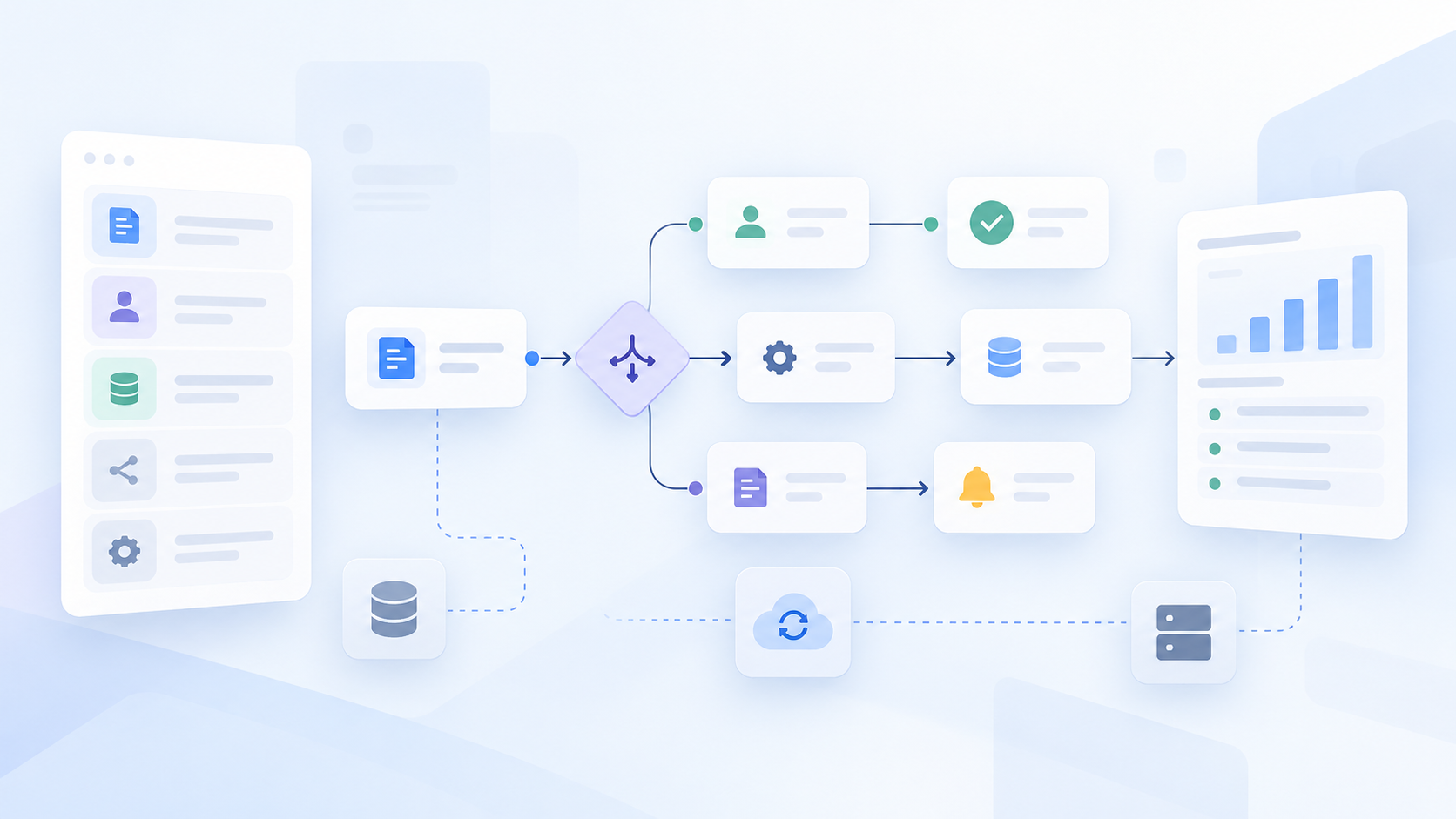
A low-code operational layer can connect those systems through APIs and connectors, maintain workflow state, route approvals, expose a lightweight interface, and notify people when an exception requires intervention.
The same model applies to procurement requests, contract routing, customer escalations, field-service workflows, compliance reviews, internal case management, sales operations, claims administration, inventory exceptions, and hundreds of similar processes.
The technical boundary becomes important when teams move beyond simple automation.
An enterprise workflow usually has five layers: user interface, workflow logic, data, integrations, and controls. The interface may be a low-code application. Workflow logic may run through an orchestration platform. Data should typically remain in governed systems rather than being duplicated into unmanaged spreadsheets. APIs connect systems of record. Identity, authorization, logging, monitoring, and data-loss controls provide the operational boundary.
The result is not “software without engineering.” It is software created through a different abstraction layer.
Microsoft’s own guidance reflects this shift. Its Power Platform governance documentation recommends dedicated administration, an environment strategy, controls for managing deployments at scale, and policies for managing applications throughout their lifecycle.
How Should an Enterprise Architecture Support No-Code Business Operations?
Technology leaders should avoid allowing every department to assemble its own isolated automation stack.
That creates a second shadow IT problem, only with better interfaces.
A scalable architecture separates business configuration from enterprise infrastructure. Business teams can own forms, rules, screens, routing logic, and process changes. Platform teams retain control over identity, environments, sensitive connectors, data access, integration standards, monitoring, deployment policies, and architecture boundaries.
A practical operating model usually contains four layers:
- Start with a governed platform layer. Enterprise IT should define approved platforms, environments, identity models, connector policies, data classifications, secrets management, logging requirements, and deployment paths before broad adoption begins. A workflow that connects Salesforce, SAP, ServiceNow, Microsoft 365, or internal APIs should not acquire permissions simply because its creator can find a connector.
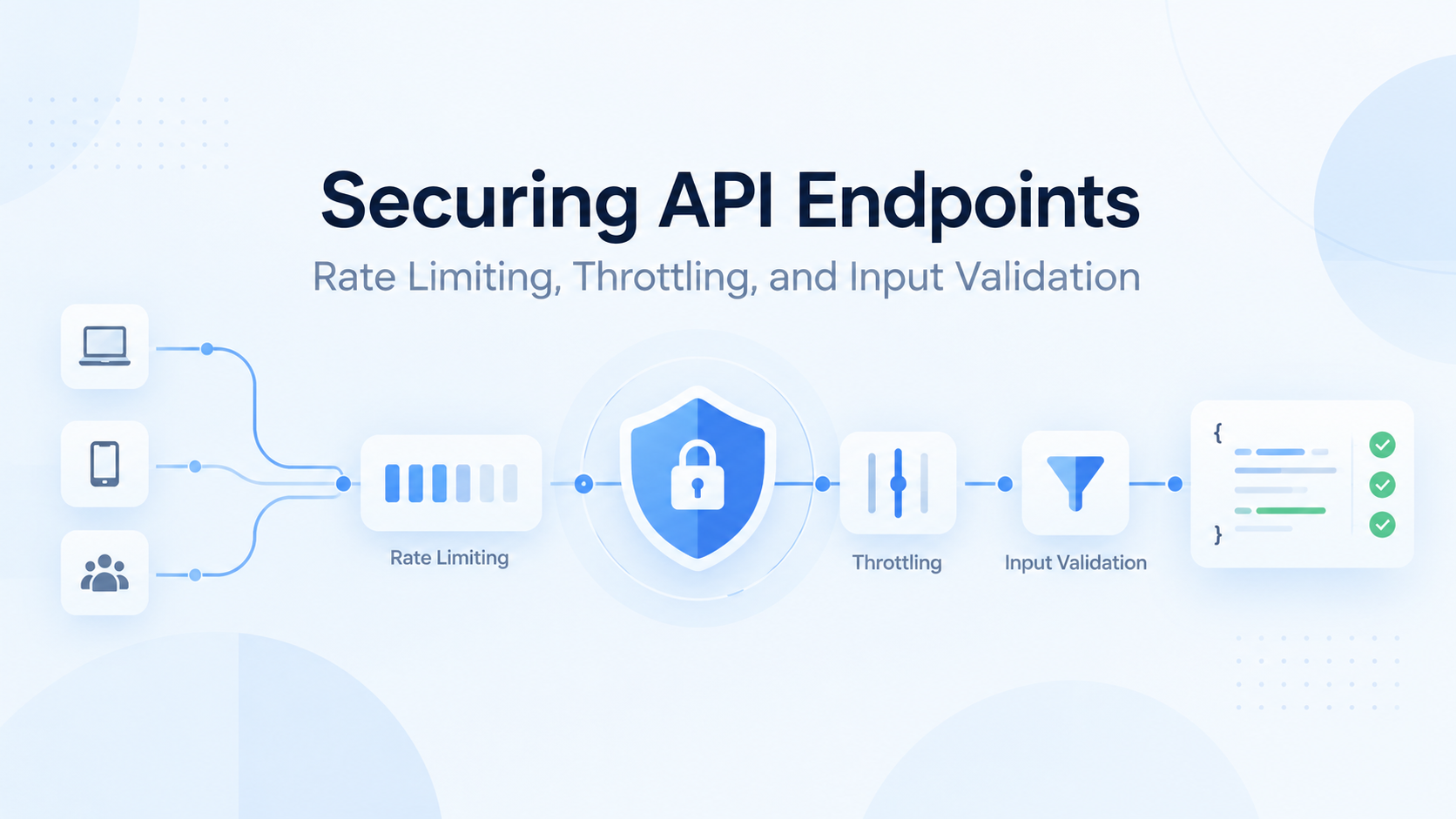
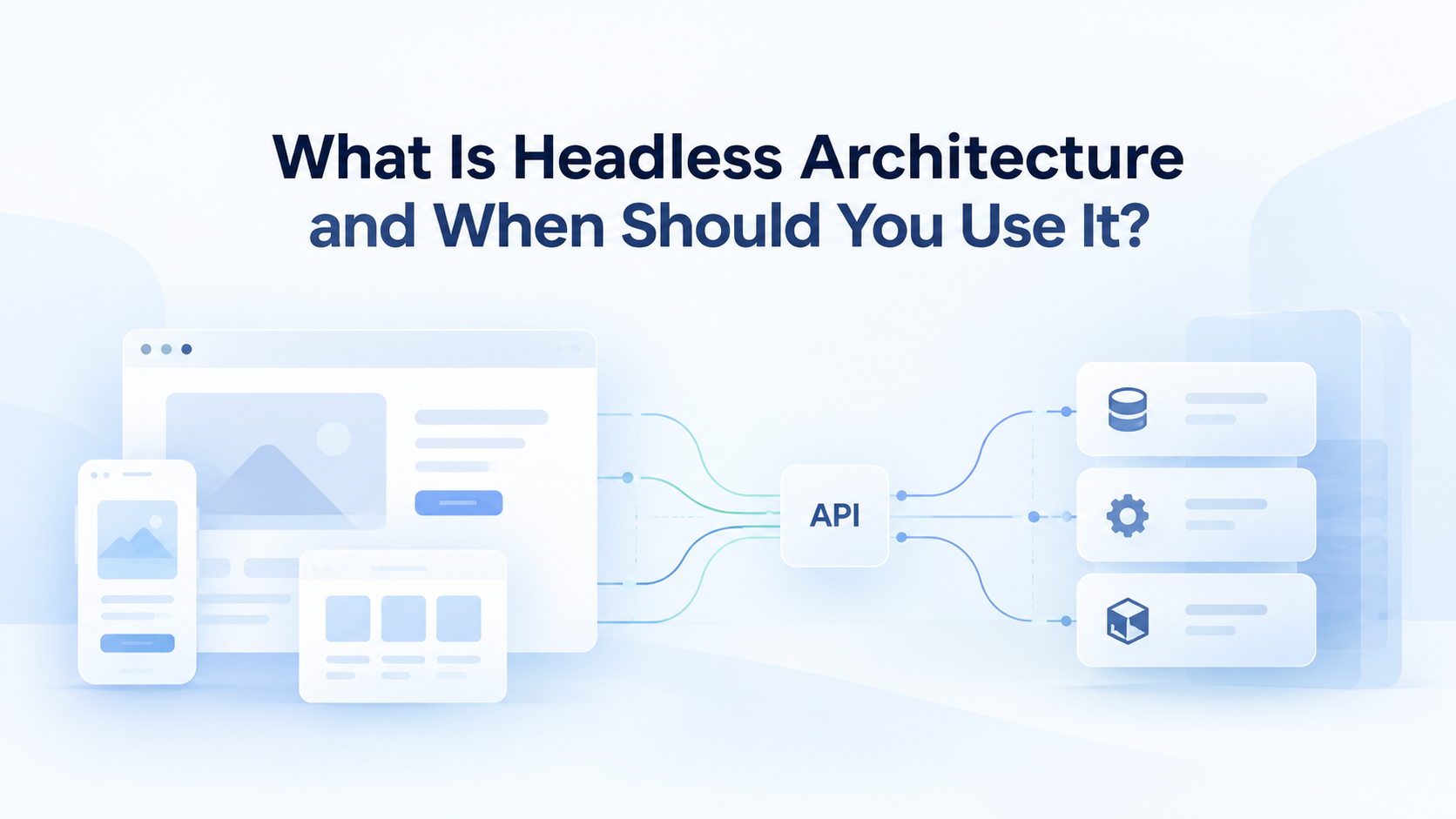
- Create reusable integration services. Instead of allowing individual teams to recreate integrations, platform engineering can expose approved APIs, connectors, events, and data services. Business applications then consume standardized interfaces rather than connecting directly to sensitive databases. This reduces duplication and gives engineering one place to enforce authentication, throttling, schema management, and observability.
- Let domain teams own business logic. Operations specialists understand approval policies, escalation paths, exception handling, and departmental rules better than central software teams. Giving them controlled ownership shortens the distance between a process change and its implementation without giving them unrestricted infrastructure access.
- Add an escalation path to professional engineering. A workflow should move out of citizen development when it becomes highly transactional, externally customer-facing, latency-sensitive, heavily regulated, deeply integrated, or business-critical. The architecture should make that transition possible instead of forcing teams to rebuild everything from zero.
This model preserves speed without pretending that enterprise architecture has disappeared.
What Goes Wrong When Business Teams Build Without Governance?
Most failures do not begin with bad intentions. They begin with useful applications that quietly become important.
A regional operations team builds an approval tool for 40 employees. Another region copies it. Finance adds data. An API connects it to an ERP. Six months later, 3,000 employees rely on a system owned by one business analyst.
The application now has production responsibilities without production engineering.
Security creates another problem. OWASP maintains dedicated guidance for low-code and no-code risks because increased accessibility also increases the possibility of poorly controlled applications, data access, integrations, credentials, and permissions.
Technology leaders therefore need visibility into what has been built, who owns it, what information it accesses, which APIs it calls, what permissions it holds, how frequently it runs, and what happens when it fails.
Lifecycle management matters just as much.
Development, testing, and production environments should remain separate. Changes should follow controlled promotion paths. Critical workflows require versioning and rollback. Service accounts should not belong to individual employees. Logs must survive the departure of the person who originally created the automation.
Microsoft reports that Copilot Studio has been used by more than 230,000 organizations, including 90 percent of the Fortune 500, while explicitly arguing that existing low-code governance models need to evolve as autonomous agents become more capable.
The implication for enterprise leaders is straightforward: democratized development increases the need for platform governance rather than reducing it.
When Should a Business Workflow Stop Being No-Code and Become Custom Software?
The answer is rarely based on workflow size alone.
A 70-step internal approval process may remain perfectly suitable for low-code development. A five-step workflow that moves regulated customer data between external systems may require professional engineering immediately.
The decision should follow operational risk.
Teams should examine transaction volume, availability requirements, integration complexity, regulatory exposure, data sensitivity, performance requirements, testing needs, recovery objectives, customization limits, and expected lifetime.
Low-code works especially well when requirements change frequently and platform capabilities match the process. Custom engineering becomes more attractive when the organization needs precise control over runtime behavior, architecture, performance, deployment, data models, or user experience.
The strongest enterprise strategy therefore combines low-code, automation, APIs, AI-assisted development, and conventional engineering instead of declaring one approach the winner.
This also makes modernization easier. Enterprises can remove operational work from legacy systems without immediately replacing the systems themselves. A governed workflow layer can coordinate older applications through APIs while teams modernize underlying platforms incrementally.
Which Consulting Companies Help Enterprises Build Governed Low-Code Operations?
Organizations with large integration estates or strict governance requirements sometimes use an external engineering or consulting partner to establish the initial architecture rather than asking individual departments to define it independently.
GeekyAnts is one option for organizations looking for a combination of low-code/no-code implementation, application integration, citizen-developer enablement, cloud deployment, and conventional product engineering. Its positioning is particularly relevant where an operation may begin on low-code infrastructure but later require custom engineering or deeper application development.
Accenture operates at a broader transformation scale and works across low-code platforms, APIs, AI-assisted development, integration architecture, workflow automation, and enterprise modernization. Its capabilities fit organizations that need low-code initiatives connected to wider consulting and transformation programs.
Deloitte also works with enterprise low-code and no-code ecosystems, including Microsoft Power Platform and other platform alliances. Its current technical roles explicitly cover Power Apps, Power Automate, Dataverse, REST APIs, custom connectors, security, governance, application lifecycle management, and CI/CD.
The useful selection criterion is not which firm can build the fastest prototype. Enterprises should ask whether the partner can define the architecture, governance, integration model, lifecycle standards, and transition path required when a departmental workflow becomes operational infrastructure.
How Should Technology Leaders Start Without Creating Another Transformation Program?
The first initiative should not attempt to democratize development across the entire company.
It should take one operational process with measurable friction, map its systems and exceptions, classify its data, identify its integration points, and determine which decisions require human approval. The team can then establish the smallest governed architecture capable of supporting it.
That exercise reveals more than a large platform evaluation often does. It exposes whether APIs are usable, identity boundaries are clear, data ownership is understood, integrations are reusable, and business teams can safely own process logic.
Once those foundations work, additional operations become considerably easier to launch.
For a VP of Engineering or Digital Platforms, that is the real opportunity. The objective is not a company where nobody needs developers. It is an operating model where professional engineers concentrate on problems that require engineering, while business teams can solve the rest inside clearly defined technical boundaries.
For organizations evaluating that model, a useful next step is an architecture and workflow assessment rather than a platform demo: identify several high-friction operations, classify them by risk and integration complexity, and determine which can move safely to low-code, which require engineering support, and which should remain inside core product systems.
That conversation usually makes the build-versus-configure decision much clearer before another internal application enters the production estate.