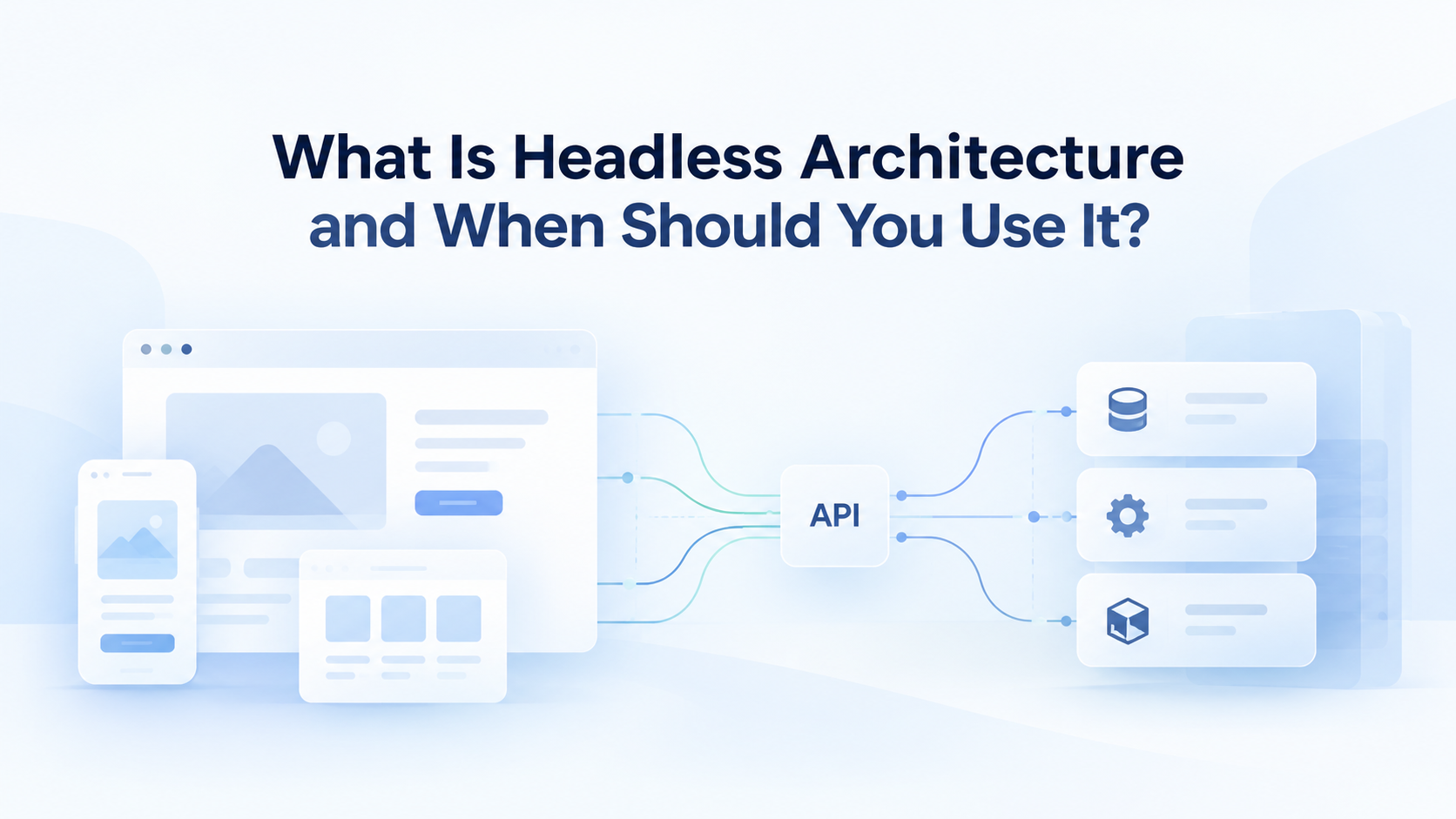
For enterprise technology leaders, headless architecture is rarely just a question of choosing a new CMS or frontend framework. It is a question of how much independence different parts of the digital estate need.
A retailer may need to update its mobile experience without touching checkout logic. A financial institution may want to modernize customer-facing applications while keeping transaction systems intact. A multinational enterprise may need the same product, pricing, or content data available across websites, apps, portals, kiosks, and emerging AI interfaces.
In each case, tightly coupling the experience layer to the underlying platform can slow change.
Headless architecture addresses that problem by separating presentation from the systems that provide content, data, and business capabilities. But that flexibility comes with another side of the equation: more APIs, integrations, deployment pipelines, security boundaries, monitoring requirements, and engineering ownership.
That makes headless architecture useful under the right conditions, not a default architecture for every enterprise application.
What Is Headless Architecture, and What Actually Changes?
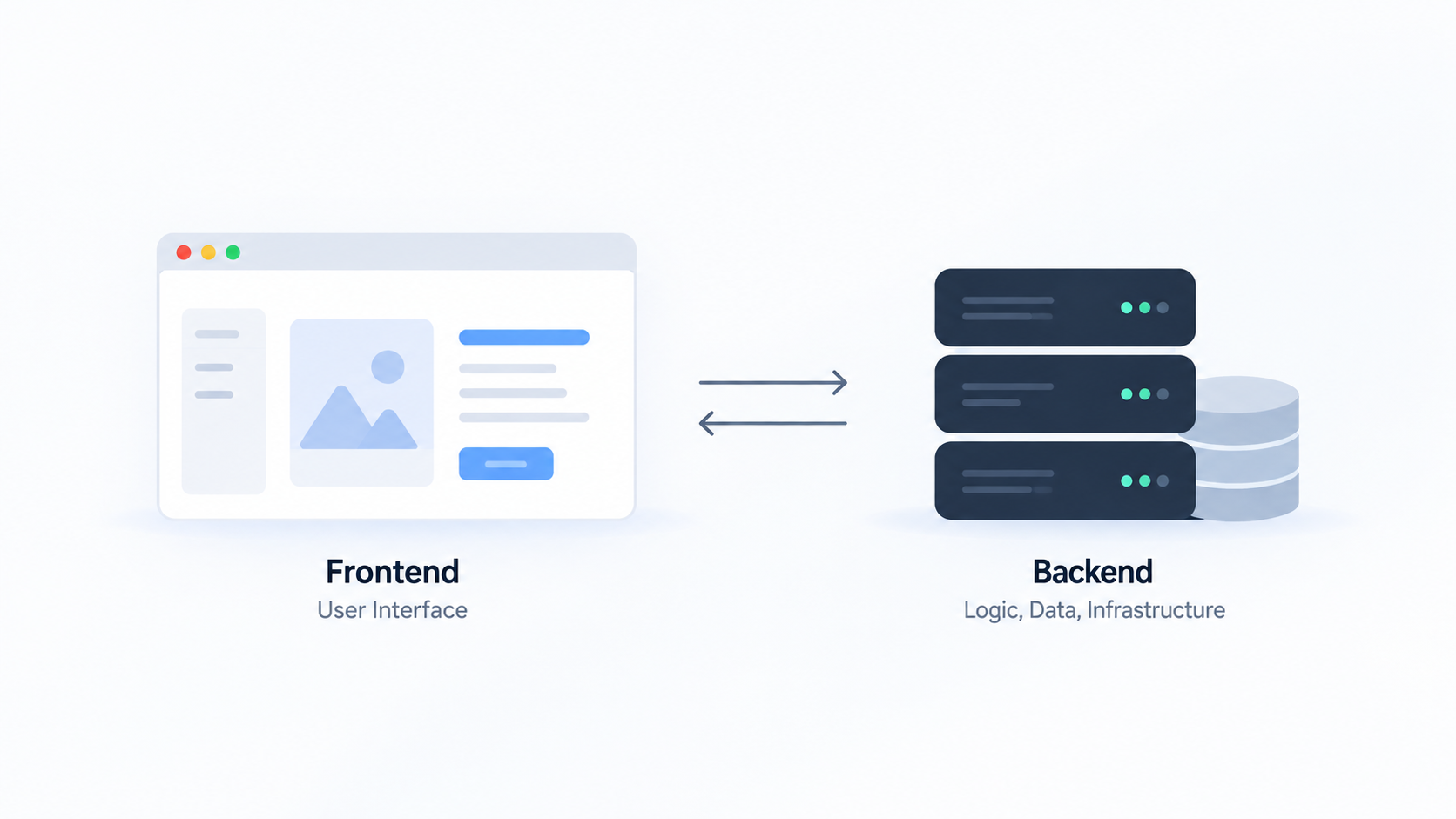
Headless architecture separates the frontend presentation layer from the backend systems supplying data, content, and business functionality.
In a traditional architecture, a CMS, commerce platform, or enterprise application may control both what information exists and how users see it. Templates, application logic, content management, and presentation can therefore become closely connected.
A headless system breaks that dependency.
The backend exposes capabilities through APIs. Separate frontend applications consume those APIs and decide how information should appear. A web application built with React or another framework, a native mobile application, a customer portal, an in-store display, and potentially an AI interface can therefore interact with the same underlying services.
Salesforce describes the pattern similarly: data and business logic remain on the platform while the interface consuming them can change. Its headless commerce architecture, for example, exposes commerce capabilities through APIs so businesses can build independent storefronts and other buying experiences.
The important word is independent.
Headless does not mean the backend disappears. It means frontend release cycles, technology decisions, and experience design no longer need to be dictated entirely by that backend.
How Does Headless Architecture Work in an Enterprise Technology Stack?
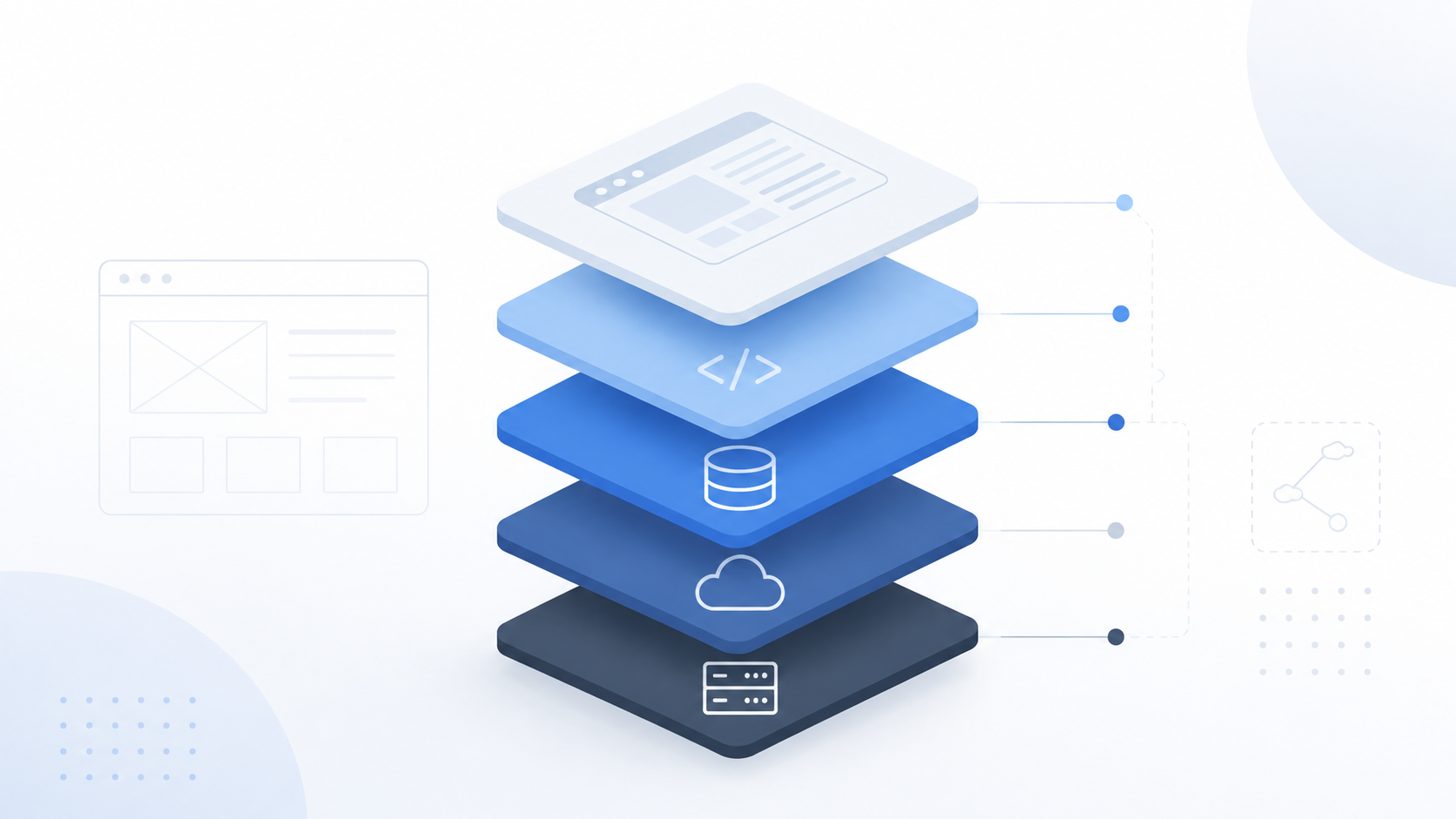
A production headless architecture normally contains more than a frontend connected directly to a CMS.
The experience layer may consist of several web and mobile applications. Behind it, APIs expose content, product information, search, identity, pricing, orders, payments, customer profiles, recommendations, or other domain capabilities.
An API gateway or backend-for-frontend layer may sit between those experiences and enterprise services. Authentication and authorization still need to be enforced. Caching, CDN delivery, rate limiting, observability, API versioning, schema management, failover behavior, and service-level objectives also become architectural concerns.
Content-heavy platforms introduce another decision: how pages should render. Teams may use server-side rendering, static generation, incremental regeneration, client rendering, or combinations of these approaches depending on freshness, personalization, SEO, and performance requirements.
This is why headless architecture should not be reduced to “frontend freedom.”
It changes where complexity lives.
A tightly integrated platform may provide templates, previews, authentication, media optimization, caching, search integration, and publishing workflows out of the box. In a headless implementation, engineering teams may need to assemble or integrate those capabilities themselves. Earlier analysis of headless implementations has highlighted exactly these issues, including additional frontend development, authentication, SEO, caching, media optimization, and technical expertise.
For a large enterprise, the architectural value comes when this extra engineering investment removes a bigger constraint elsewhere.
When Does Headless Architecture Make Sense for an Enterprise?
Several conditions provide a stronger case for separating the experience layer.
- Multiple customer experiences depend on the same business capabilities. If websites, mobile apps, employee portals, partner applications, kiosks, and other channels all need access to common content or services, exposing those capabilities through APIs reduces the need to recreate backend functionality for every interface. Salesforce positions headless commerce around exactly this model, allowing the same commerce capabilities to support multiple touchpoints.
- Frontend teams need to release independently from core platforms. Large enterprises frequently run systems whose change cycles are much slower than customer experience teams can tolerate. Decoupling allows teams to redesign navigation, introduce new journeys, run experiments, or replace frontend technology without forcing equivalent changes to the systems of record.
- The organization is modernizing incrementally instead of replacing everything. A headless layer can help preserve stable backend investments while progressively replacing presentation layers. This becomes particularly useful where replacing ERP, commerce, banking, insurance, or other core systems simply to improve customer experience would create unnecessary cost and operational risk.
- Composable architecture already forms part of the technology strategy. Headless often operates alongside API-first services, cloud infrastructure, and independently deployable components. The MACH Alliance’s 2026 enterprise study, based on 600 senior technology decision-makers at organizations with at least 5,000 employees or $500 million in annual revenue, reported that 92 percent had implemented or were actively adopting composable technology. The finding does not mean every enterprise needs headless architecture, but it does show that modular technology strategies have moved well beyond experimentation.
What Problems Does Headless Architecture Create?
Decoupling solves dependencies. It can also create new ones.
Instead of debugging one application, operations teams may need to trace a user request across a frontend, CDN, gateway, CMS, search provider, identity service, commerce engine, and several internal APIs.
API contracts therefore become production infrastructure.
Breaking an API can affect several experiences simultaneously. Schema ownership, backward compatibility, API versioning, authentication policies, rate limits, service monitoring, distributed tracing, and dependency mapping all require stronger discipline.
Content operations can also become more complicated. A conventional CMS often provides direct page previews because content and presentation exist within the same platform. In headless environments, preview infrastructure must connect draft content to the correct frontend environment. Strapi, for example, documents separate preview mechanisms specifically because presentation runs outside the CMS.
SEO requires deliberate architecture as well. Teams need rendering strategies, canonical rules, structured metadata, redirects, sitemaps, internal linking, image optimization, and Core Web Vitals controls to survive frontend changes. Headless enables teams to optimize these elements, but it does not automatically implement them.
Security follows the same pattern. Separating systems can isolate the CMS or core platform, but every API introduces a boundary that must be authenticated, authorized, monitored, and protected.
Headless shifts responsibility toward engineering. Organizations should make sure they actually want that responsibility before adopting it.
How Should Enterprises Decide Whether Headless Architecture Is Worth It?
The best decision starts with constraints rather than technologies.
If one website, one backend, and one delivery team satisfy the business requirement, adding a distributed headless stack may create architecture without creating business value.
The calculation changes when the organization repeatedly loses time because frontends cannot change without backend releases, several channels duplicate the same business logic, legacy presentation layers prevent customer experience improvements, or acquisitions and regional platforms need to consume common enterprise services.
Leaders should compare the cost of current coupling against the cost of future decoupling.
That means examining release lead time, duplicated capabilities, integration effort, change failure risk, channel expansion plans, developer ownership, platform licensing, infrastructure, observability, security, and operational support.
The target architecture may not need to be fully headless either. A phased approach can decouple one high-change experience while leaving stable areas untouched.
That is often more defensible than replacing a functioning platform because headless happens to fit a modernization narrative.
Which Consulting Companies Work on Headless and Composable Architecture?
Enterprises that lack internal architecture capacity sometimes use engineering and consulting partners to assess or implement these programs.
Accenture approaches headless as part of broader composable commerce, combining API-first development, cloud infrastructure, microservices, and decoupled customer experiences. Deloitte similarly frames headless and composable commerce around separating experience layers from commerce services and back-office systems where greater adaptability is required.
GeekyAnts is another option where the requirement leans toward hands-on web engineering and modernization rather than strategy alone. Its web engineering practice specifically covers headless CMS architecture, frontend modernization, scalable web architecture, CI/CD, observability, and production readiness.
The relevant distinction is less about company rankings and more about the engagement required. Some organizations need portfolio strategy and operating-model transformation. Others already know which platform must remain and need an engineering team to determine how safely the experience layer can be separated from it.
What Should Teams Validate Before Committing to Headless Architecture?
Before approving a headless program, technology leaders should be able to explain precisely which dependency they are removing.
They should know which systems remain authoritative, which capabilities become APIs, which teams own those contracts, how rendering will work, how identity propagates across layers, how failures will be traced, and which parts of the current platform no longer need to move at the same release cadence.
If those answers remain unclear, selecting a headless CMS or frontend framework is premature.
A more useful first step is often an architecture assessment around one real customer journey. Mapping its current dependencies, release bottlenecks, API gaps, performance constraints, security boundaries, and ownership model can reveal whether headless architecture removes meaningful friction or merely redistributes complexity.
That conversation usually makes the decision much easier: keep the existing architecture where coupling is useful, and introduce separation only where independence creates measurable value.