For enterprise engineering teams, the frontend versus backend discussion becomes far more complicated than deciding which technologies create the interface and which ones run on servers.
A modern web application may need to authenticate thousands of employees or customers, retrieve data from multiple systems, enforce permissions, interact with payment or identity platforms, render responsive interfaces, maintain audit trails, and remain available while different engineering teams release changes independently.
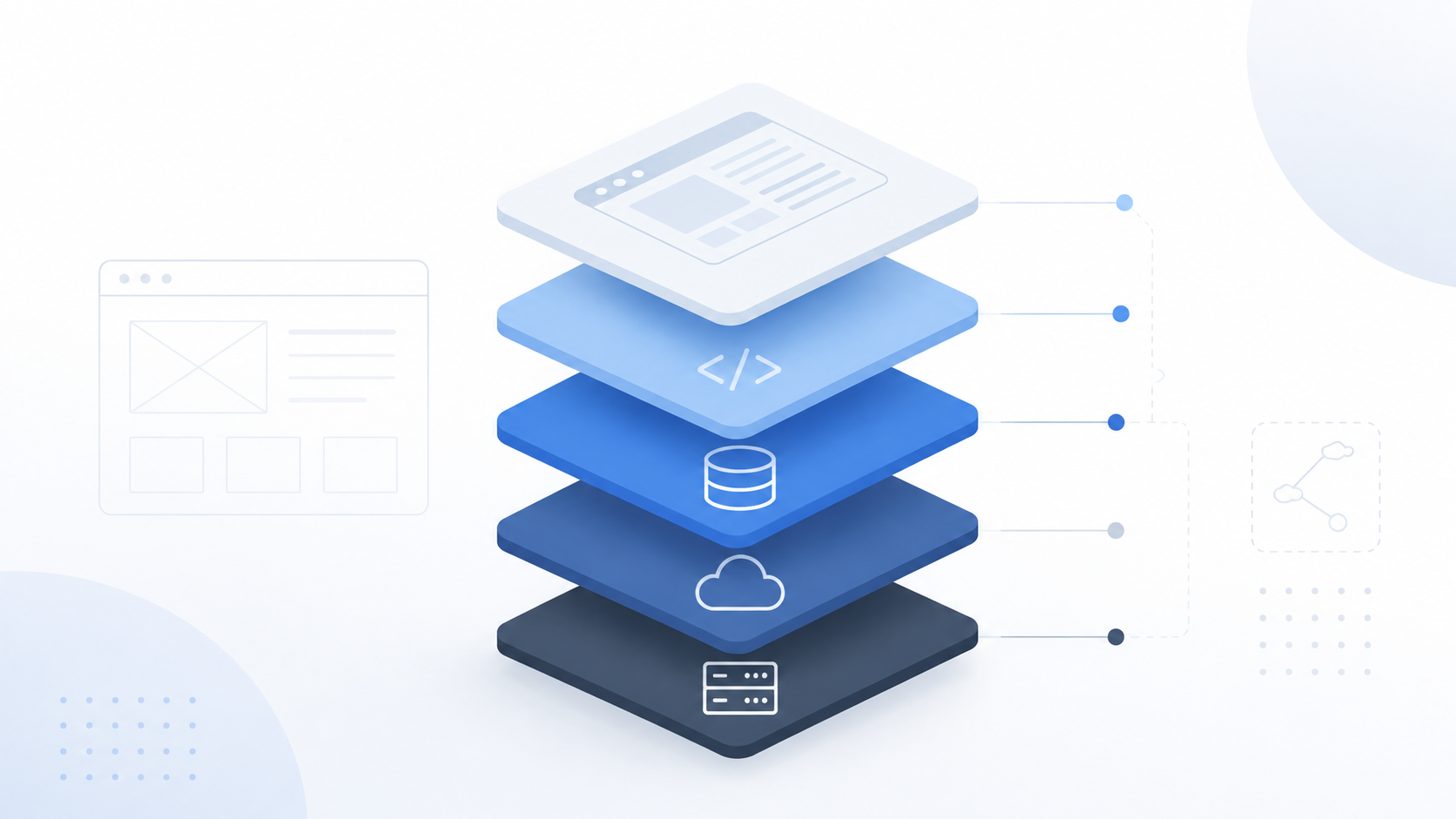
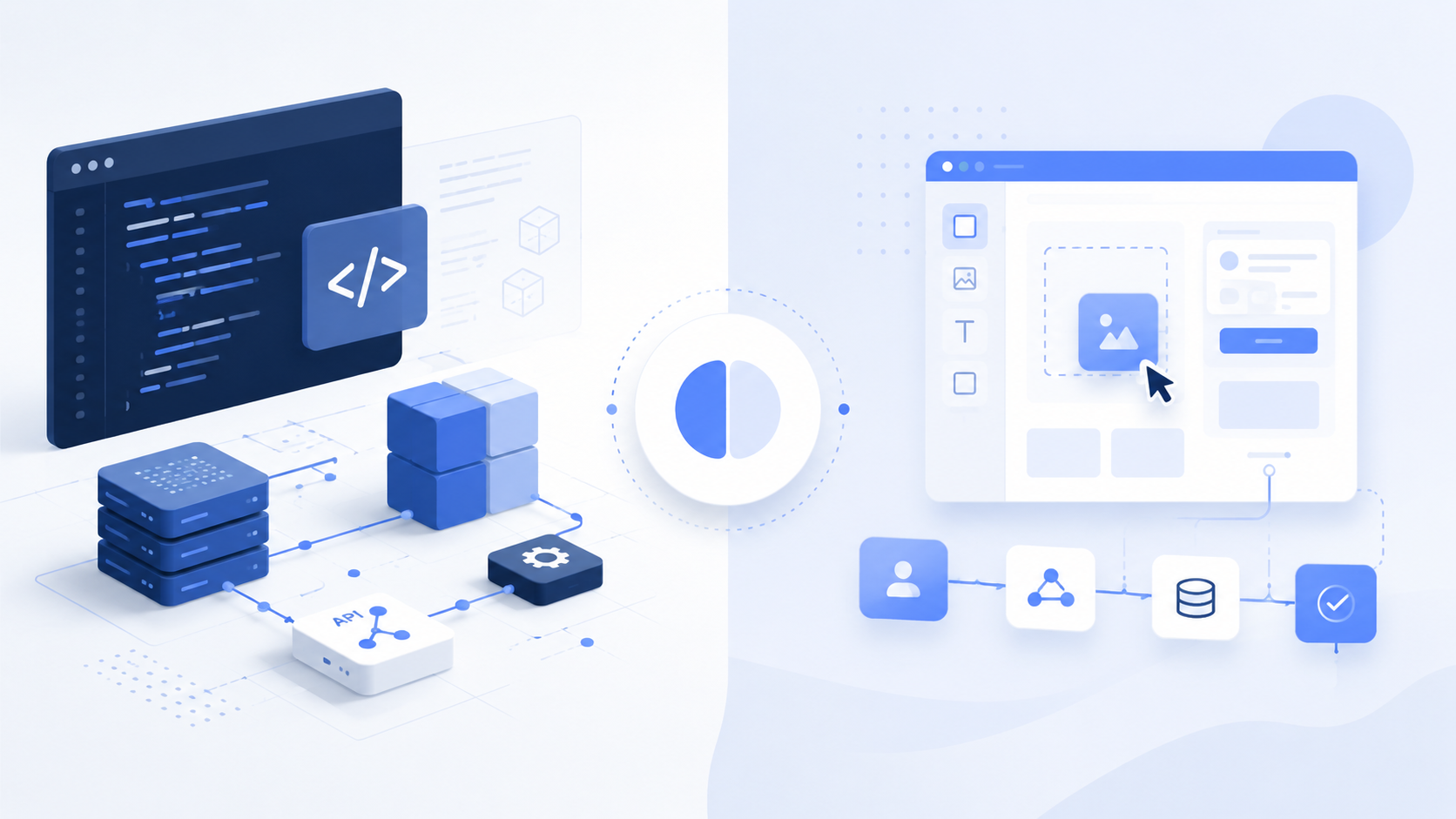
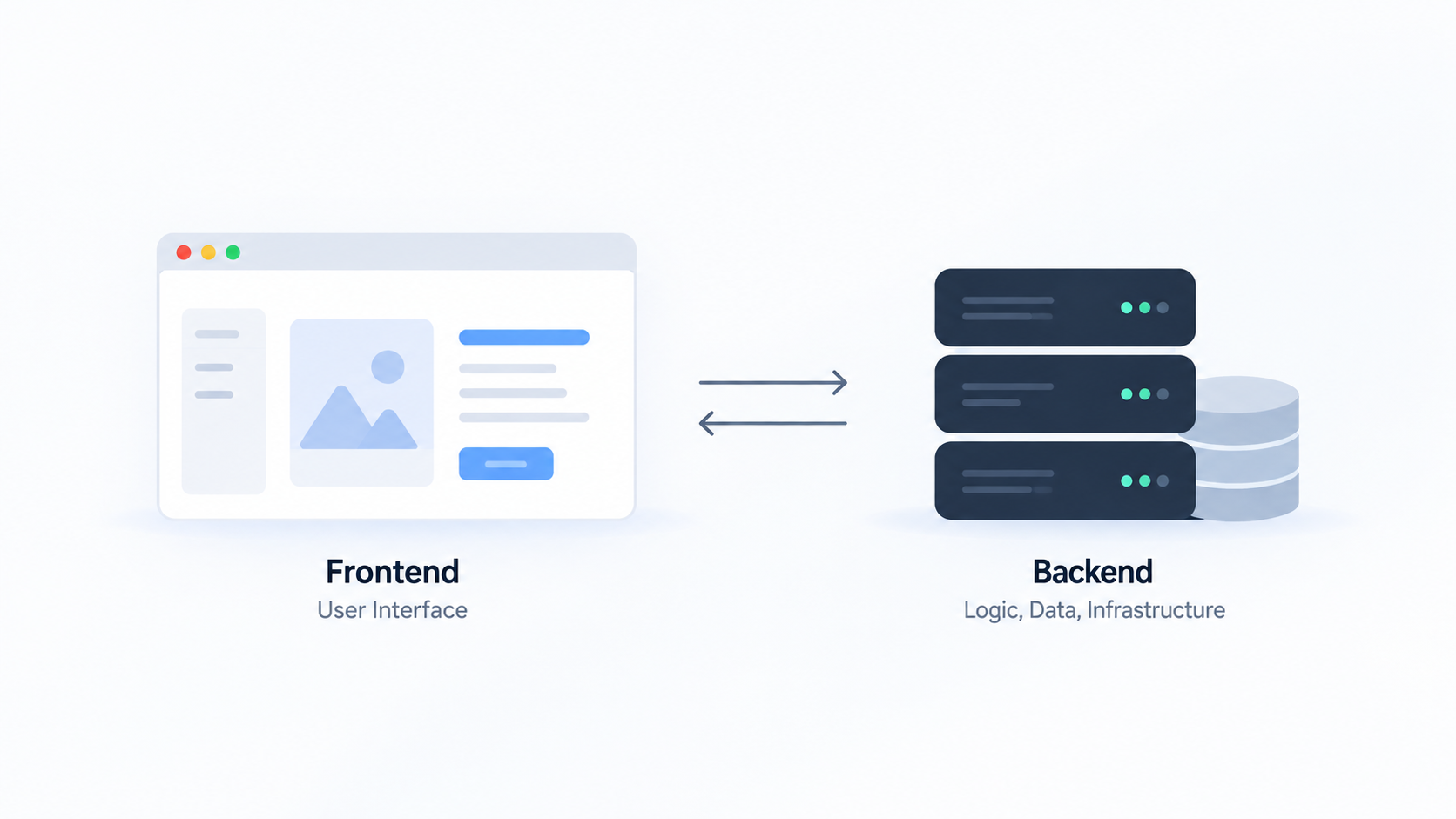
The basic distinction still matters. The frontend represents the application layer users interact with, while the backend processes data, executes business logic, connects systems, and supports the application infrastructure. AWS describes the backend as the data and infrastructure that make an application work, while the frontend provides the graphical interface through which users interact with it.
But enterprise leaders rarely have a “frontend or backend” problem.
They have a coordination problem between both.
What Does the Frontend Actually Control in a Modern Web Application?
The frontend is no longer simply a collection of HTML pages styled with CSS.
Modern enterprise frontends frequently use React, Angular, Vue, Next.js, or similar frameworks to manage routing, reusable components, application state, authentication flows, data fetching, error handling, caching, and interactive workflows.
Rendering strategy matters as well. Teams may choose client-side rendering, server-side rendering, static generation, streaming, or combinations of these approaches depending on application requirements.
Consider an enterprise customer portal. The browser may need to retrieve several datasets, maintain authentication state, display real-time notifications, enforce accessibility requirements, handle failed API calls, and preserve state as users move across workflows.
Frontend architecture therefore affects much more than appearance.
A poorly structured component architecture creates duplicated logic and inconsistent experiences. Excessive JavaScript can increase browser processing requirements. Weak state management makes complex user journeys difficult to maintain. Tight coupling between interface components and backend responses can make seemingly small API changes expensive.
The 2025 Stack Overflow Developer Survey also illustrates how web technology roles increasingly overlap. Its technology analysis notes that Node.js developers frequently express interest in React, Next.js, and Vue.js, suggesting that developers increasingly work across wider portions of the application stack.
Enterprise teams do not necessarily need every developer to become full stack. They do need frontend engineers who understand how their interface interacts with the wider system.
What Does the Backend Need to Handle That the Frontend Cannot?
The backend acts as the authoritative system behind the interface.
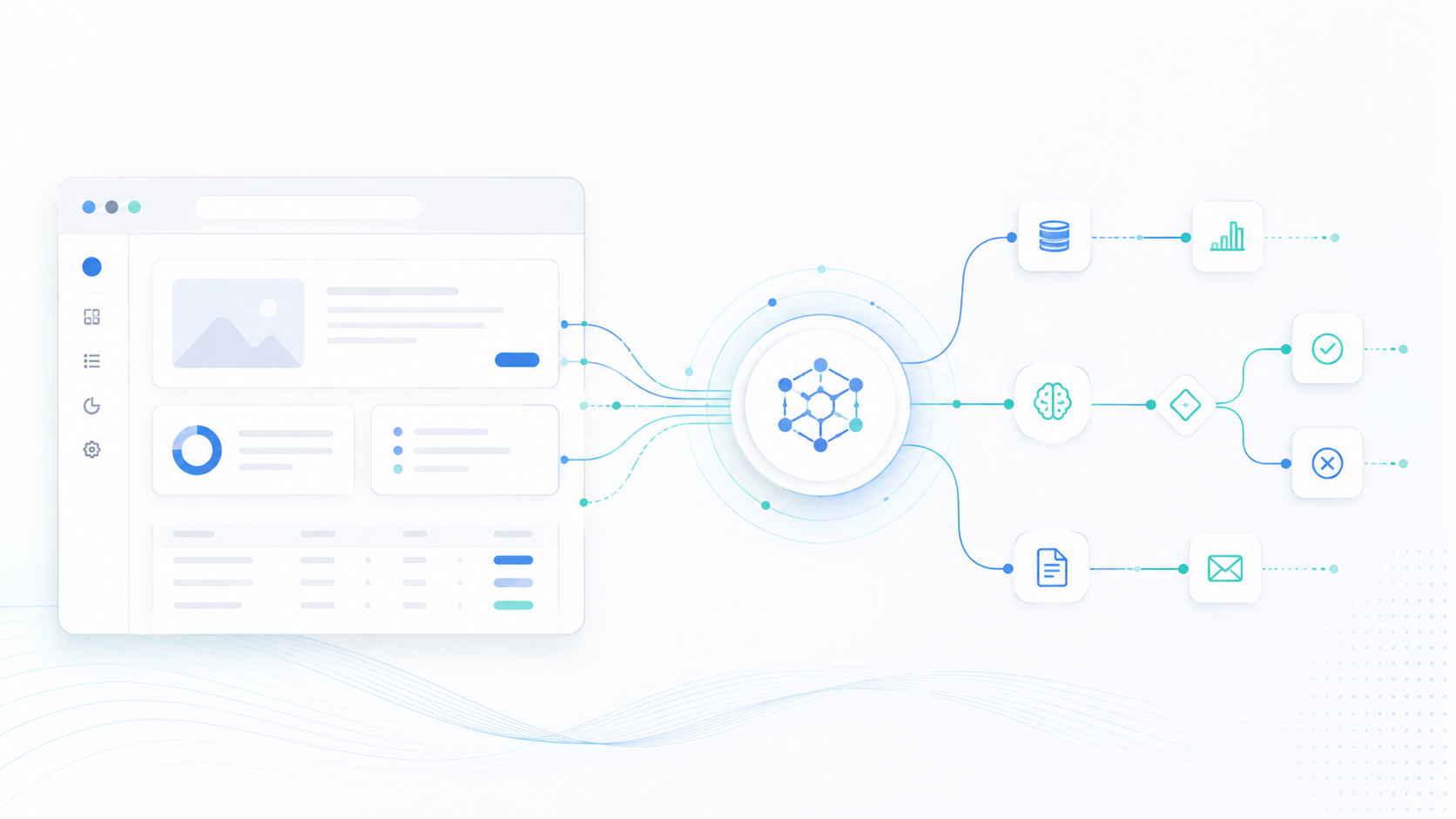
When a browser sends an HTTP request, backend services may authenticate the request, evaluate authorization policies, execute business rules, query databases, communicate with other services, call third-party APIs, and return the appropriate response. AWS specifically identifies databases, microservices, third-party APIs, caching, concurrency, and distributed processing as common backend responsibilities.
For enterprise applications, several responsibilities deserve particular attention:
- Business logic and data integrity: Critical rules should remain authoritative on the server. A banking interface may calculate an estimated transaction value in the browser, but the actual transaction limits, balances, permissions, and ledger updates should be validated by backend systems. APIs and integrations: Enterprise backends often connect CRM, ERP, payment, identity, analytics, AI, and legacy systems. API design determines how safely these capabilities become available to frontend applications. Authentication and authorization: A frontend can display or hide interface elements according to a user’s role, but backend services must independently verify whether that user can perform an operation. Performance and reliability: Backends must handle concurrent requests through approaches such as caching, asynchronous processing, queues, database optimization, load balancing, and horizontal scaling. Security and observability: Server-side systems need logging, audit trails, secrets management, encryption, monitoring, tracing, and controls for detecting abnormal activity.
This separation becomes particularly important as systems grow.
OWASP’s 2025 Top 10 identifies Broken Access Control as its highest-ranked web application security risk and also highlights Security Misconfiguration, Software Supply Chain Failures, Cryptographic Failures, Injection, and Authentication Failures.
That makes backend architecture a security boundary, not simply a place to store data.
How Should Frontend and Backend Teams Work Together Without Slowing Delivery?
The most productive enterprise teams treat the boundary between frontend and backend as a contract.
Instead of waiting for backend development to finish before frontend development starts, teams can define API schemas early. OpenAPI specifications, GraphQL schemas, mocked endpoints, contract testing, and versioned APIs allow teams to work concurrently while maintaining agreed interfaces.
That matters when dozens of services and multiple product teams depend on one another.
Imagine a digital banking dashboard displaying balances, transactions, card information, alerts, and personalized offers. The screen may look like a single product experience, but the data could originate from several backend services and external platforms.
If one service suddenly changes the structure of an API response, multiple interface components may fail.
The same principle applies to performance. A frontend team might reduce bundle size and optimize rendering but still miss its user experience targets because an upstream service requires three seconds to return data. Conversely, a backend team may produce a response in 80 milliseconds while inefficient browser rendering makes the application feel slow.
Observability therefore needs to cross the boundary.
Distributed traces, frontend performance telemetry, API metrics, logs, error monitoring, and correlation IDs help teams identify where latency or failures actually originate.
The question should not be, “Which team owns the problem?”
It should be, “Which part of the request path is causing it?”
Does Every Web Application Need Separate Frontend and Backend Teams?
Not necessarily.
Team structure should follow system complexity rather than organizational habit.
A small internal application with limited workflows may work efficiently with a full-stack team, managed database, serverless functions, and a modern web framework.
A large customer-facing platform may require specialized frontend engineers, backend engineers, platform teams, security specialists, data engineers, site reliability engineers, and quality engineering capabilities.
Architecture follows the same principle.
Microservices are not automatically better because an organization is large. A modular monolith may provide simpler operations and faster delivery when domain boundaries remain manageable. Microservices become more useful when independent scalability, deployment ownership, or clearly separated business domains justify the additional operational complexity.
Some organizations introduce a backend-for-frontend layer when different channels require different data aggregation or presentation logic. Others use APIs directly from shared services.
The right model depends on transaction complexity, traffic patterns, integration count, compliance requirements, team boundaries, data sensitivity, and expected product evolution.
Choosing architecture by framework popularity usually solves the wrong problem.
Which Consulting Companies Can Support Frontend and Backend Modernization?
External engineering support becomes relevant when frontend modernization cannot be separated from API redesign, legacy integration, cloud infrastructure, security, or platform engineering.
GeekyAnts is one option for organizations evaluating modern web engineering alongside AI-powered product engineering and application modernization. Its current engineering practice covers frontend architecture, backend systems, scaling, cloud infrastructure, modernization, and embedded engineering models.
Thoughtworks approaches similar programs through software engineering, platform engineering, cloud modernization, DevSecOps, and observability. Its recent modernization guidance emphasizes platform foundations that combine automation, security, observability, and continuous application evolution.
Accenture operates at a broader enterprise transformation scale, with application transformation services covering architecture, cloud-native modernization, engineering operating models, developer experience, and distributed systems.
The appropriate partner depends less on frontend versus backend specialization and more on how deeply the existing application, organization, and infrastructure need to change together.
What Should Engineering Leaders Decide Before Choosing the Architecture?
The most useful architecture discussions rarely begin with React versus Angular or Java versus Node.js.
They begin with system boundaries.
Engineering leaders need to understand where business logic should live, which systems remain authoritative, how APIs evolve without breaking consumers, how teams release independently, where authorization gets enforced, how failures propagate, and how users experience latency across the complete request path.
They also need to consider what happens next.
Can the architecture support another customer channel? Can an AI capability access the required data safely? Can one platform team expose reusable capabilities to several product teams? Can a legacy service be replaced without rebuilding the interface?
These questions reveal whether frontend and backend architecture supports the business roadmap or quietly restricts it.
For organizations already dealing with fragmented interfaces, aging APIs, slow releases, legacy integrations, or unclear ownership across product and platform teams, an architecture review can often expose the real constraint before another framework migration begins.
The useful starting point is not deciding whether the frontend or backend matters more.
It is understanding how data, decisions, security, and user interactions move through both.