
Choosing React for an enterprise web application is no longer simply a frontend developer preference. The decision can affect release velocity, platform architecture, hiring, design-system adoption, performance, and how easily multiple product teams can work on the same digital estate.
React remains deeply established in the JavaScript ecosystem. The State of JavaScript 2025 survey reported that 83.6% of respondents had used React, while the 2025 Stack Overflow Developer Survey continued to show substantial React adoption among web developers. Popularity alone, however, is not a sufficient reason for a large enterprise to standardize on it.
The more useful question for a VP of Engineering is whether React helps teams change a large digital product without making every change a coordination problem.
For the right application, it can. But the advantage comes from architecture and engineering discipline, not simply from installing React.
Why is React useful for large-scale web application development?
React’s component model is its most important enterprise characteristic.
A banking portal, commerce platform, healthcare application, or internal operations system rarely consists of a few isolated pages. It may contain hundreds of workflows, multiple authentication states, role-specific experiences, shared navigation, forms, dashboards, data tables, notifications, and common interaction patterns.
Building these as components creates boundaries around UI behavior.
A payment-status component, for example, can define its rendering, states, accessibility behavior, tests, and interface independently of the page containing it. That becomes more valuable when an organization operates multiple products.
The architecture can also support a shared design system. Instead of five teams independently implementing buttons, forms, validation states, modals, and accessibility behavior, platform teams can maintain reusable primitives that product teams consume.
That does not automatically eliminate duplication. Poorly designed component libraries can simply centralize it. Enterprises still need ownership rules, versioning, testing, documentation, and clear boundaries between reusable platform components and product-specific components.
React’s one-way data model also makes application behavior easier to reason about as interfaces become more stateful. Thoughtworks, which continues to place React in its “Adopt” category in its April 2026 Technology Radar, specifically points to React’s reactive data flow and componentization as important characteristics.
For engineering leadership, that translates into something more practical: teams can make frontend change less dependent on understanding the entire application.
Does React actually help enterprise teams release software faster?
React can improve delivery velocity, but reusable components are only part of the explanation.
Its mature ecosystem gives engineering teams established options for testing, routing, data handling, accessibility, design systems, observability, and build tooling. TypeScript has also become closely associated with modern React development. State of JavaScript 2025 respondents reported writing an average of 77% of their JavaScript-related code in TypeScript, illustrating the broader shift toward typed application development.
For a large engineering organization, that ecosystem can reduce the number of foundational problems teams solve themselves.
React 19 has also changed the performance and development discussion. React Compiler 1.0 can automatically optimize component rendering through build-time memoization, reducing some of the manual optimization previously handled with patterns such as useMemo and useCallback. The compiler supports React 17 and later, although earlier versions require an additional runtime package.
The larger benefit is organizational consistency. If teams standardize architecture, testing, design-system usage, observability, and deployment conventions around React, engineers moving between products encounter fewer unfamiliar patterns.
That is where standardization can shorten delivery cycles. React itself does not create the efficiency. A well-governed React platform does.
Can React support performance, SEO, and modern rendering requirements?
The common statement that “React is fast because of the Virtual DOM” is too simplistic for a modern enterprise architecture.
A React application can still perform poorly if teams ship excessive JavaScript, trigger unnecessary rendering, create oversized bundles, misuse state, or force every experience into a client-rendered single-page application.
Modern React architecture provides more choices.
React’s official guidance recommends that new production applications start with a framework. Those frameworks can support client-side rendering, static-site generation, server-side rendering, and route-specific combinations of those approaches.
React Server Components extend that model further. They can execute before bundling in a server or build environment, allowing some work and dependencies to remain outside the browser bundle. React documents Server Components in React 19 as stable, while noting that framework and bundler implementation APIs still require careful version management.
That matters for customer-facing platforms where Core Web Vitals, search visibility, conversion, and low-powered devices matter.
There is also a legitimate counterargument. Web developer Jeremy Keith has argued that unnecessary client-side React imposes a JavaScript cost on users and that teams should reconsider whether every website requires React in the browser. That criticism is useful because it exposes an architectural mistake: selecting React does not require turning every page into a JavaScript-heavy SPA.
The enterprise question should therefore be where React executes, not simply whether React is used.
Can React help modernize legacy applications without a full rewrite?
For many enterprises, this may be a stronger argument for React than greenfield development.
A company with a ten-year-old customer portal rarely has the option to stop feature delivery for eighteen months while engineering rebuilds everything. Revenue workflows, regulatory changes, security updates, and customer commitments continue during modernization.
React can be introduced into portions of an existing interface rather than requiring immediate replacement of the entire application. Teams can establish new component boundaries around high-change areas and progressively move functionality toward a modern frontend architecture.
That makes React useful in strangler-style modernization strategies where the organization replaces capabilities gradually.
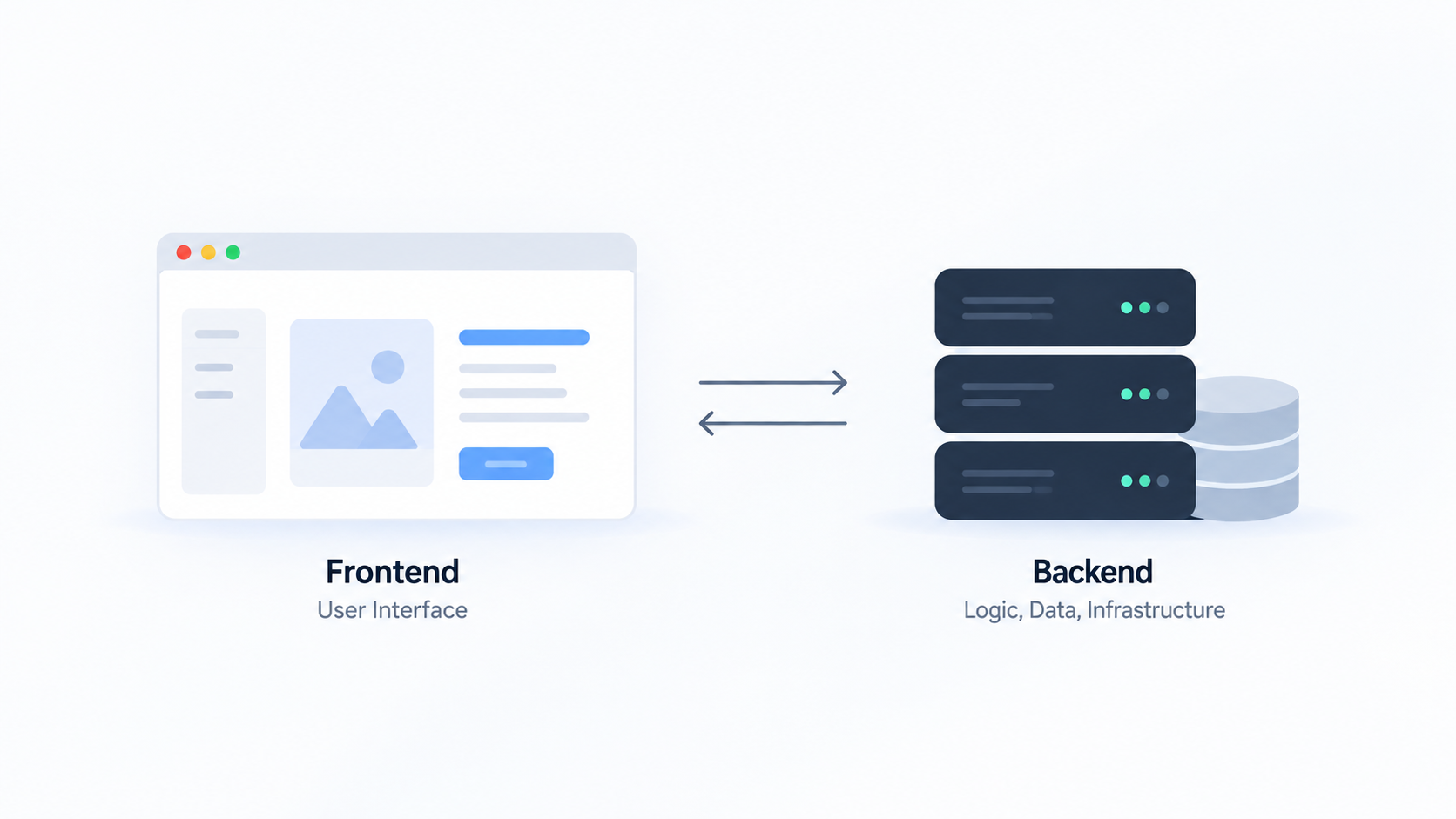
It also fits API-driven architectures. The frontend can consume services exposed by existing systems while backend modernization proceeds on a separate timeline.
However, incremental modernization needs architectural control. Otherwise the enterprise ends up operating the legacy application, a new React application, duplicated UI libraries, multiple state models, and competing deployment pipelines simultaneously.
Before migration starts, engineering leaders need an explicit target architecture and retirement plan.
When should an enterprise not use React?
React should not become an organizational default merely because teams already know it.
A mostly static content experience with minimal interaction may need little client-side JavaScript. A simple internal application may not justify a sophisticated React platform. Another application may already sit successfully inside an established Angular, Vue, or server-rendered architecture where migration would create cost without improving measurable outcomes.
React also introduces choice. Teams must make decisions about frameworks, routing, state management, rendering strategies, testing, caching, data fetching, and deployment architecture. The State of JavaScript 2025 survey identified excessive complexity, performance, state management, dependencies, and breaking changes among recurring frontend pain points.
Flexibility becomes technical debt when every team makes those decisions independently.
The decision therefore needs to start with application characteristics, not framework preference.
Which consulting companies work with React at enterprise scale?
Organizations that need external architecture or delivery support have several types of partners available.
GeekyAnts works across React-related web and cross-platform engineering and has a long-running engineering focus around the broader React ecosystem. Thoughtworks has used React as its default JavaScript UI choice since 2016 and continues to recommend it in its 2026 Technology Radar. Accenture also maintains enterprise React capabilities, with current engineering roles explicitly covering React architecture, performance optimization, testing, CI/CD, and large-scale web applications.
The more important evaluation criterion is not whether a consultancy can supply React developers. Enterprises should examine whether the partner can make architecture decisions across frontend boundaries, APIs, cloud infrastructure, security, accessibility, performance, observability, and modernization.
How should engineering leaders decide whether React is right for their application?
The final decision should come down to the operating model around the application.
Engineering leaders should examine expected UI complexity, number of contributing teams, release frequency, performance targets, rendering requirements, design-system reuse, accessibility obligations, existing JavaScript capability, backend dependencies, and the cost of operating the platform for the next several years.
React becomes compelling when the organization needs a highly interactive interface that will change frequently and be developed by multiple teams. Its component model, ecosystem, rendering options, TypeScript compatibility, and mature engineering practices provide a strong foundation.
But React is a foundation, not an architecture.
Before committing to it for a major build or modernization program, teams benefit from mapping the current application architecture against the proposed React model, including rendering boundaries, state ownership, API dependencies, component governance, migration sequencing, performance budgets, and deployment strategy.
A focused architecture consultation around those questions can reveal whether React will simplify the platform or merely introduce another technology layer. That distinction is worth establishing before the first production component is built.